Echo is more than an irritating reflection. It can blur speech, weaken concentration, and make a quiet room feel strangely loud. In a classroom, one delayed syllable may reach the back wall after the next sentence begins. That small overlap reduces clarity.
So, what is the best way to control echo? The reliable answer begins with measurement, not decoration. ISO 3382-2 identifies reverberation time, or RT60, as a key acoustic indicator. It measures how long sound takes to decrease by 60 decibels after the source stops. The ASHRAE Handbook—HVAC Applications, 2023 edition, also treats room volume, absorption, background noise, and speech clarity as connected design factors. These sources support a practical principle: control reflections across the room, rather than covering one wall and expecting miracles.
The World Health Organization’s Environmental Noise Guidelines for the European Region, published in 2018, links excessive noise exposure with sleep disturbance, annoyance, and reduced wellbeing. Echo is not identical to environmental noise, but it can intensify the perceived problem. Field assessments often reveal hard ceilings, glass partitions, bare floors, and parallel walls working together. Absorptive ceiling panels, fabric wall treatments, bookshelves, carpets, and irregular surfaces can interrupt that pattern. The result should be tested with speech, music, and measured reverberation time. It may not sound perfect. That matters. Acoustic control is a balancing exercise, because too much absorption can leave a room dull, lifeless, or uncomfortable. The best solution fits the room’s purpose, dimensions, materials, and occupants.
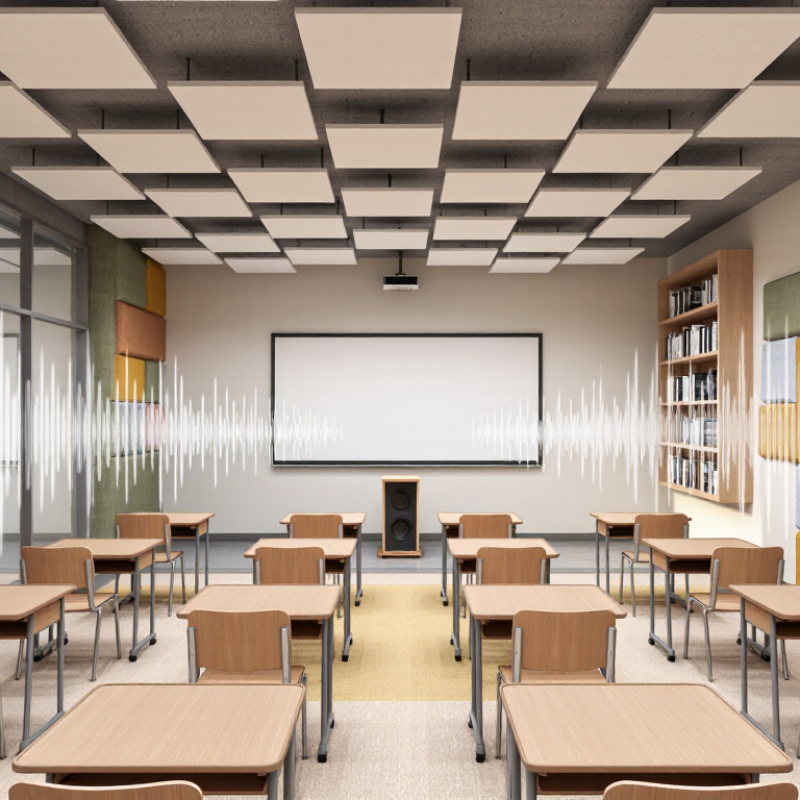
What Is the Best Way to Control Echo?
Understanding Why Echo Occurs in Indoor Spaces
Echo begins when sound strikes hard surfaces and returns to the listener. Glass, concrete, tile, and painted walls reflect sound strongly. In an empty room, a hand clap may bounce several times before fading. This repeated sound makes speech unclear and music tiring.
Room shape also matters. High ceilings and parallel walls can trap reflections between surfaces. A long hallway often creates a sharper echo than a wide room. Furniture changes the result, but not always enough. A sofa may absorb some sound, while a bare window still reflects it across the room.
I once tested a small meeting room by clapping near the doorway. The floor had carpet, yet voices still sounded metallic. The ceiling and rear wall were the real problem. Adding fabric panels at those reflection points reduced the echo noticeably. Soft curtains and filled bookcases helped too. They scattered and absorbed sound.
The most reliable approach combines absorption, diffusion, and measurement. Place thick materials on walls facing speakers or conversation areas. Treat the ceiling when reflections arrive from above. Avoid covering every surface, because an overly dead room can feel unnatural. A simple recording can reveal improvement, although professional acoustic testing is more precise. My first layout was not ideal. I focused on the floor and overlooked the walls.
Echo occurs when sound reflects from hard, smooth surfaces and returns after a noticeable delay. Effective control usually combines sound absorption, diffusion, room layout, and reduction of parallel reflective surfaces.
| Control Method | Why Echo Occurs | How It Works | Typical Acoustic Effect | Best Placement | Most Effective Frequency Range | Practical Use | Limitations |
|---|---|---|---|---|---|---|---|
| Porous Acoustic Panels | Bare walls and ceilings reflect speech and music repeatedly. | Fibrous materials convert part of the sound-wave energy into small amounts of heat. | Common panels have an indicative NRC of about 0.60–1.00, depending on thickness, spacing, and construction. | First-reflection points on side walls, rear walls, and ceilings. | Mid and high frequencies, approximately 500–4,000 Hz. | Classrooms, offices, studios, meeting rooms, and home theaters. | Thin panels are less effective against low-frequency buildup. |
| Acoustic Ceiling Treatment | A hard ceiling can create strong vertical reflections between the floor and ceiling. | Suspended clouds, acoustic tiles, or a sound-absorbing ceiling reduce reflected energy overhead. | Can substantially reduce reverberation when the ceiling is a major reflective surface. | Above seating, workstations, presentation areas, and other high-activity zones. | Primarily mid and high frequencies; thicker systems improve lower-frequency absorption. | Large open-plan rooms, classrooms, restaurants, and multipurpose halls. | Installation may be difficult where sprinklers, lighting, or ventilation occupy ceiling space. |
| Heavy Curtains and Drapes | Glass windows and smooth doors reflect sound efficiently. | Pleated fabric absorbs some sound and reduces direct reflection from glazing. | Typical performance ranges from low to moderate absorption, often around NRC 0.10–0.40, depending on fabric and fullness. | Across windows, glass partitions, and other hard vertical surfaces. | Mostly mid and high frequencies. | Bedrooms, conference rooms, theaters, and rooms with extensive glazing. | Lightweight or flat curtains provide limited absorption. |
| Carpet and Area Rugs | Hard floors reflect sound and can reinforce early reflections. | Fibers and underlay absorb part of the sound near the floor. | Often provides moderate high-frequency absorption; performance varies widely with pile and underlay. | Between speakers and listeners, under tables, and across large hard-floor areas. | Mainly high frequencies; limited effect at low frequencies. | Living rooms, offices, recording spaces, and lecture rooms. | Floor treatment alone cannot control reflections from walls and ceilings. |
| Upholstered Furniture | An empty room has less sound absorption than an occupied room. | Fabric, foam, and irregular surfaces absorb and scatter reflected sound. | Adds distributed absorption and reduces the difference between occupied and unoccupied conditions. | Throughout seating areas and along rear or side walls. | Mid and high frequencies, with greater effect from large, cushioned furniture. | Auditoriums, lounges, waiting areas, cinemas, and residential rooms. | Furniture arrangement can change sound distribution and usable floor area. |
| Bass Traps | Low-frequency waves accumulate between room boundaries and at corners. | Thick porous absorbers or membrane systems target long low-frequency wavelengths. | Reduces boomy sound, modal peaks, and uneven bass response when correctly sized. | Vertical corners, wall-ceiling junctions, and rear wall areas. | Low frequencies, commonly below 250 Hz. | Recording rooms, home theaters, music practice rooms, and control rooms. | Requires substantial depth or specialized construction; small thin panels are usually insufficient. |
| Diffusers and Irregular Surfaces | Parallel flat surfaces can create flutter echo and concentrated reflections. | Uneven surfaces scatter sound in different directions instead of returning one strong reflection. | Improves sound uniformity and reduces distinct flutter without necessarily lowering overall reverberation substantially. | Rear walls, side walls, and ceiling areas away from early-reflection points. | Designed frequency range varies; many systems target mid and high frequencies. | Music rooms, studios, performance spaces, and listening rooms. | Diffusion is not a substitute for adequate absorption in highly reverberant rooms. |
| Room Layout and Surface Angles | Parallel walls and large opposing surfaces reinforce repeated reflections. | Angled surfaces, open shelving, plants, and varied furniture interrupt direct reflection paths. | Reduces flutter echo and improves sound distribution before additional treatment is installed. | Between opposing walls, behind listeners, and around large reflective objects. | Broadband effect, depending on the size and materials of the objects. | New construction, renovations, offices, classrooms, and living areas. | Layout changes alone may not achieve sufficient reverberation control in large rooms. |
Echo occurs when sound strikes hard surfaces and reflects back. Glass, concrete, tile, and painted walls reflect strongly.
High ceilings, parallel walls, long hallways, bare windows, and empty floors can trap repeated reflections.
Sofas, rugs, curtains, and filled bookcases absorb or scatter sound. However, furniture alone may not fix ceiling reflections.
Place thick materials on walls facing speakers or conversation areas. Treat the ceiling when reflections arrive from above.
Yes. Lined curtains reduce window reflections, while dense rugs soften footsteps and floor reflections.
Not always. Too much absorption can make speech sound dull, close, or unnatural.
Clap from several positions and listen for lingering reflections. A simple recording can reveal changes, though testing is imperfect.
Persistent echo may require measurement, ceiling treatment, wall panels, and improved furnishings. It depends.
It should explain reverberation targets, surface coverage, installation limits, and follow-up measurements.
Appearance does not prove acoustic balance. Thin fabric may absorb little, while uncovered ceilings continue reflecting sound.
Echo occurs when sound waves reflect repeatedly from hard, smooth surfaces such as walls, ceilings, floors, windows, and empty furniture areas. Understanding these reflections is the first step toward improving speech clarity and creating a more comfortable indoor environment. Unwanted echo may also come from large open spaces, high ceilings, bare corners, or rooms with very little furniture.
To control it, add soft acoustic materials that absorb sound, including rugs, curtains, upholstered furniture, wall hangings, and suitable acoustic panels. Room layout also matters: placing furniture strategically, breaking up large reflective surfaces, and avoiding excessive open space can reduce sound buildup. If echo remains a problem, professional acoustic treatments can provide a more precise solution through customized testing and installation. Overall, what is the best way to control echo depends on the room’s size, surfaces, purpose, and level of reverberation, but combining absorption, thoughtful placement, and expert guidance usually delivers the most effective results.

 Dubuild Panel