Acoustic issues in buildings often go unnoticed until they become significant problems. These challenges can affect the comfort and productivity of occupants. Understanding what are common acoustic problems in buildings is essential for architects, builders, and owners. Poor sound insulation, echo, and noise transmission are just a few examples.
Many factors contribute to these issues, such as building materials and design choices. For instance, hard surfaces can reflect sound and create unwanted echoes. Inadequate soundproofing can lead to noise intrusion from adjacent spaces or outside. Implementing effective acoustic treatments can be a complex task, often requiring expertise.
Reflecting on these challenges, it's important to recognize that solutions are not always straightforward. While some problems may seem small, their cumulative effect can significantly disrupt daily life. Addressing these acoustic concerns can lead to improved environments. Exploring and acknowledging these issues is the first step in creating more harmonious spaces.
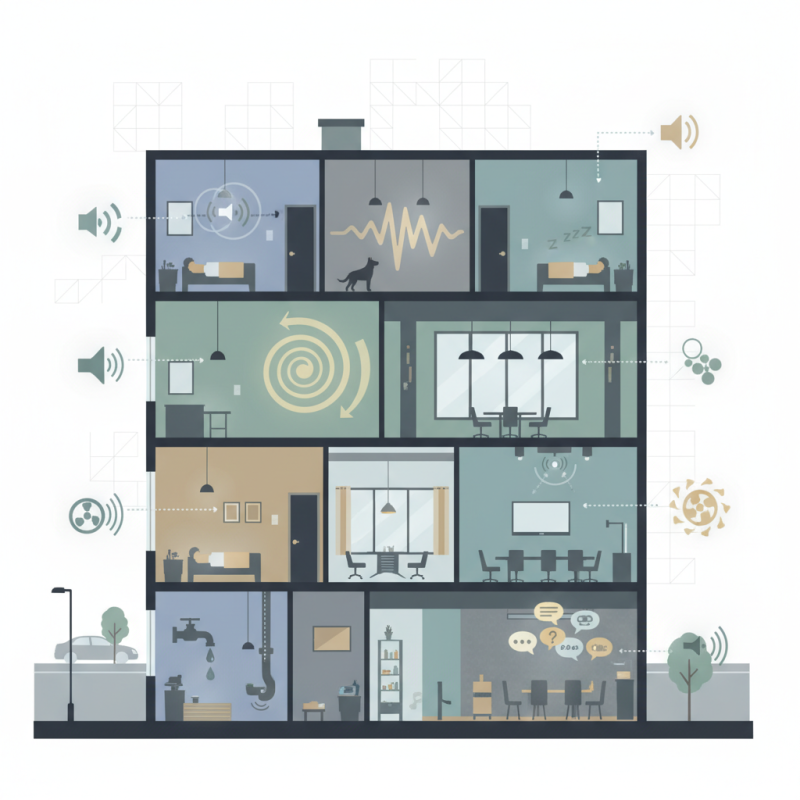
Understanding Reverberation and Its Impact on Acoustic Quality
Understanding reverberation is essential for creating optimal acoustic quality in buildings. Reverberation occurs when sound waves bounce off surfaces, creating echoes that can muddy sound clarity. In spaces like concert halls, this can enhance the experience. In offices or homes, it may become a nuisance. Different materials influence this phenomenon greatly. For instance, hard surfaces amplify reverberation, while soft materials dampen it.
To improve acoustic quality, consider these tips. Use carpets or rugs to absorb sound. They can significantly reduce unwanted echoes. Acoustic panels on walls and ceilings offer a smart solution too. These panels help manage sound reflection. They can even add aesthetic value to a space.
Think about room shape as well. Irregular shapes can disrupt sound flow. High ceilings might lead to prolonged reverberation. Balance is key. Overly dampened spaces can feel lifeless, while excessively reverberated ones can be frustrating. It’s crucial to find an equilibrium that suits your building's purpose. Reflecting on these aspects can lead to a more pleasant acoustic experience.
Identifying Noise Leakage Between Rooms and Its Consequences
Noise leakage between rooms is a significant concern in many buildings. It happens due to gaps in walls, ceilings, and floors. According to a report by the World Health Organization, unwanted noise can lead to stress and reduced productivity, affecting mental health. Surveys indicate that 75% of individuals find noise from neighboring spaces disruptive.
Common sources of leakage include thin walls, poorly sealed doors, and windows. Studies show that sound can travel through structural elements at an alarming rate. For example, low-frequency sounds can permeate walls, rendering space ineffective for rest or concentration. Many people overlook the importance of acoustical insulation, which could mitigate these issues.
In residential buildings, common complaints involve sounds of footsteps or conversations. Professionals often struggle to find effective solutions for these problems. Sometimes, retrofitting existing structures can prove challenging. It may require significant investment without guaranteed outcomes. The quest for peace and quiet remains elusive for many living in urban environments.
Exploring the Effects of Soundproofing Materials on Acoustic Issues
Acoustic problems in buildings can significantly affect comfort and productivity.
Soundproofing materials play a crucial role in addressing these challenges. A report from the Acoustical Society of America indicates that poor acoustics can reduce workplace productivity by up to 30%.
This dramatic impact highlights the importance of effective soundproofing.
Sound-absorbing panels, for example, can reduce echo in large spaces. Using materials like acoustic foam or mineral wool can help minimize sound transmission.
Studies show that spaces treated with these materials can experience a reduction of noise levels by around 50%.
Yet, not all soundproofing solutions are equally effective. Inadequate installation or the wrong material choice can lead to less than satisfactory results.
Consider that while soundproofing is essential, it isn't a one-size-fits-all solution.
Each building has unique acoustic challenges. A detailed acoustic analysis is often necessary.
It can provide valuable insights into which materials would be most effective.
Many property owners overlook this step, leading to wasted resources.
It’s essential to approach soundproofing with a tailored strategy for long-term effectiveness.
Addressing Low-Frequency Noise Problems in Open Spaces
Open spaces can often amplify low-frequency noise, causing discomfort and distraction. This type of noise is difficult to control due to its longer wavelengths. It tends to penetrate through walls and ceilings. Sources may include HVAC systems, nearby traffic, or even structural vibrations. Understanding these sources helps in addressing the problems effectively.
Acoustic treatments are crucial in managing low-frequency noise. Installing bass traps can significantly reduce unwanted sounds. These are specialized panels designed to absorb low frequencies. They can be placed in corners where sound waves converge. However, not every space has the budget for extensive acoustic treatment. Evaluating priorities is essential, as sometimes, simple changes can yield noticeable improvements. For instance, utilizing soft furnishings can help to diffuse sound reflections.
Addressing low-frequency noise is not always straightforward. It requires continuous assessment of sound environments. It’s vital to listen to feedback from occupants. Often, differences in personal perception complicate solutions. Tuning acoustic strategies to specific needs might involve trial and error. This reflection on the complexity of acoustic management is as important as the fixes themselves.
Mitigating Echoes in Rooms with High Ceilings and Hard Surfaces
Rooms with high ceilings and hard surfaces can create significant echo issues. The expansive space allows sound to bounce, making conversations difficult. This acoustical challenge is common in many buildings, including offices and auditoriums. When walls and floors are made of reflective materials, sound waves reverberate, causing confusion and frustration.
To mitigate echoes, consider adding soft furnishings. Rugs, carpets, and curtains absorb sound waves, reducing reflections. Place these items strategically in areas where sound bounces the most. For instance, consider wall hangings or acoustic panels. These can help break up reflective surfaces, improving overall sound quality.
Another effective solution is to introduce plants. Large indoor plants can serve both aesthetic and acoustic purposes. They help scatter sound waves and create a warmer atmosphere. Additionally, rearranging furniture can also minimize echo effects. Arrange seating to face each other, fostering better communication and reducing the distance sound travels. By focusing on these practical steps, you can significantly enhance the acoustic comfort of any high-ceilinged room.
10 Common Acoustic Problems in Buildings You Should Know
| Acoustic Problem |
Description |
Common Solutions |
| Echo |
Reflected sound waves create a prolonged sound effect, often found in large rooms. |
Install acoustic panels, use carpets or curtains. |
| Noise Transmission |
Unwanted sounds moving from one area to another, common in multi-family buildings. |
Add insulation between walls, use soundproofing materials. |
| Room Modes |
Resonances in a room at specific frequencies that amplify certain sounds. |
Use bass traps and diffusers to manage frequencies. |
| Sound Clarity |
Poor intelligibility of speech due to excessive reverberation. |
Install sound-absorbent materials and arrange furniture effectively. |
| Low-Frequency Noise |
Disturbing sounds at low frequencies, which are difficult to insulate against. |
Use heavy curtains or specialized low-frequency treatments. |
| Flutter Echo |
Rapid succession of echoes creating a "fluttering" sound effect. |
Introduce irregular surfaces to break up sound paths, use acoustic tiles. |
| Comb Filtering |
A type of distortion where frequencies are canceled out, creating a comb-like effect. |
Utilize strategic microphone placement and treatment to reduce comb filtering. |
| Background Noise |
Persistent low-level sounds that interfere with communication. |
Use noise masking systems, sound curtains or green spaces. |
| Flanking Noise |
Noise that travels around soundproofing materials, often through ceiling or floor. |
Seal gaps, strengthen sound barriers in susceptible areas. |
| Overdamped Spaces |
Spaces that absorb too much sound leading to a dead acoustic environment. |
Balance the acoustics with reflective surfaces and selective treatment. |
FAQS
: Reverberation is when sound waves bounce off surfaces, affecting sound clarity. It matters for improving acoustic quality.
Carpets absorb sound waves, reducing echoes. They are a simple way to improve acoustic comfort in any space.
Acoustic panels manage sound reflection and enhance aesthetics. They can be placed on walls or ceilings for better acoustics.
Irregular room shapes disrupt sound flow. High ceilings can prolong reverberation, creating potential challenges in acoustics.
Use soft furnishings like rugs and curtains. They absorb sound and help minimize reflections in reflective spaces.
Yes, large indoor plants can scatter sound waves and create a warmer feel in a room, enhancing its acoustic environment.
Finding balance is crucial. Too much dampening leads to lifeless spaces, while excessive reverberation can be frustrating.
Arranging furniture to face each other helps improve conversation and reduces echo issues, making communication clearer.
Spaces that are too dampened can feel empty or lifeless. Reflection on the right amount of treatment is necessary.
Hard surfaces amplify reverberation, while soft materials, like fabrics, reduce it significantly.
Conclusion
Acoustic quality in buildings is often compromised by various issues, which raises the question: what are common acoustic problems in buildings? One significant concern is reverberation, which can affect speech clarity and overall sound experience. Additionally, noise leakage between rooms can lead to disturbances, impacting privacy and comfort. The choice of soundproofing materials plays a critical role in addressing these acoustic challenges, as they can either exacerbate or alleviate issues.
Moreover, low-frequency noise can pose challenges in open spaces, making it difficult to maintain an enjoyable environment. High ceilings and hard surfaces often contribute to unwanted echoes, further complicating the acoustic landscape. Understanding and addressing these common acoustic problems is essential for creating spaces that promote better sound quality and enhance overall occupant satisfaction.

 Dubuild Panel