 Dubuild Panel
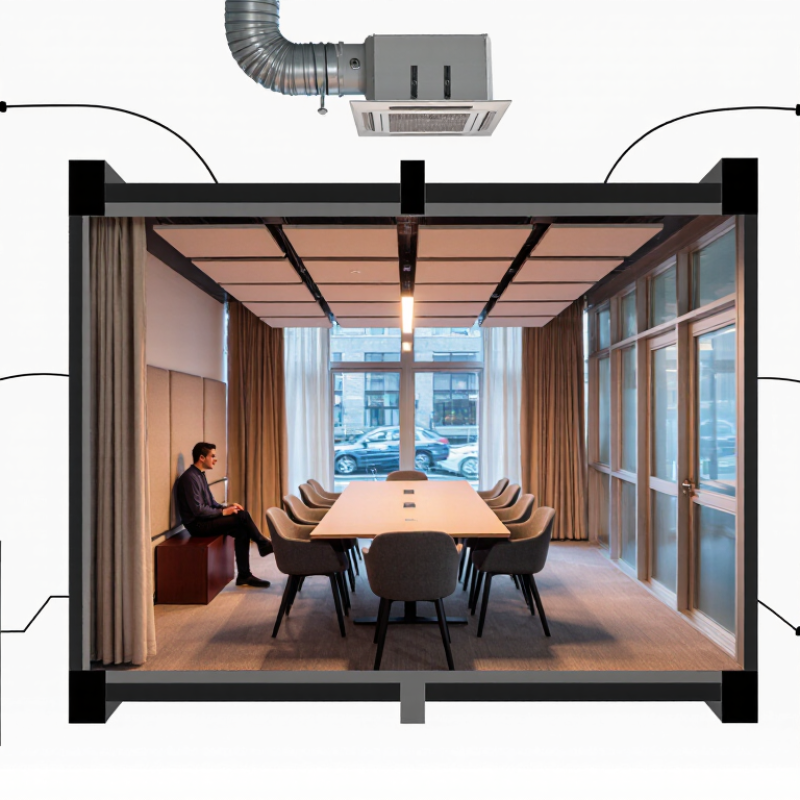
Indoor sound quality depends on more than loudness. It reflects how a room handles speech, music, mechanical noise, and reflected energy. In practice, a sharp clap in an empty room often reveals a long metallic tail. That tail suggests excessive reverberation, especially from glass, plaster, and bare flooring. A soft sofa may reduce high-frequency reflections, but it cannot solve low-frequency rumble from ventilation equipment.
Room acoustics should be assessed with measurable evidence. ISO 3382-2 describes methods for measuring reverberation time in ordinary rooms. Speech-focused spaces often perform better when reverberation remains controlled, rather than simply minimized. The World Health Organization’s Guidelines for Community Noise identify 35 dB(A) as a suitable indoor background level for classrooms. A reading above that level can mask consonants, even when the speaker is close. Use a calibrated sound-level meter where possible. Phone applications are useful for screening, not final decisions.
Noise sources require separate inspection. Listen beside air grilles, doors, windows, and shared walls. Record the room during silence, conversation, and peak equipment operation. Reflection is also directional. A hard wall behind a presenter may send sound toward the listener, while a ceiling can create distracting early echoes.
Furniture placement matters. I have found that moving a table sometimes improves clarity more than adding another panel. That is not a universal rule. Room shape, occupancy, and material placement can overturn it. Assessment remains imperfect without repeated measurements under real operating conditions.
