Understanding the distinction between soundproofing and sound absorption is crucial in both residential and commercial spaces. According to the Acoustical Society of America, up to 80% of the sound in urban environments is due to external noise, making effective sound management essential. Expert acoustician Dr. Bruce Thibault states, "Soundproofing is about blocking sound; sound absorption focuses on reducing echo." This highlights the foundational differences in their applications.
Soundproofing materials, like mass-loaded vinyl, are designed to block sound from entering or leaving a space. In contrast, sound absorption materials, such as acoustic foam panels, improve a room's acoustics but do not prevent noise transmission. The construction industry reports that proper soundproofing can enhance property values by 12% in noisy areas. However, there is often confusion between these two techniques.
Reflecting on this topic reveals gaps in understanding. Many people mistakenly believe that adding foam to a room will completely eliminate noise. In reality, a combination of soundproofing and absorption is needed for optimal results. Achieving the right balance requires knowledge of both methods and their specific benefits. What is the difference between soundproofing and sound absorption? This question remains vital for anyone looking to create a peaceful environment.
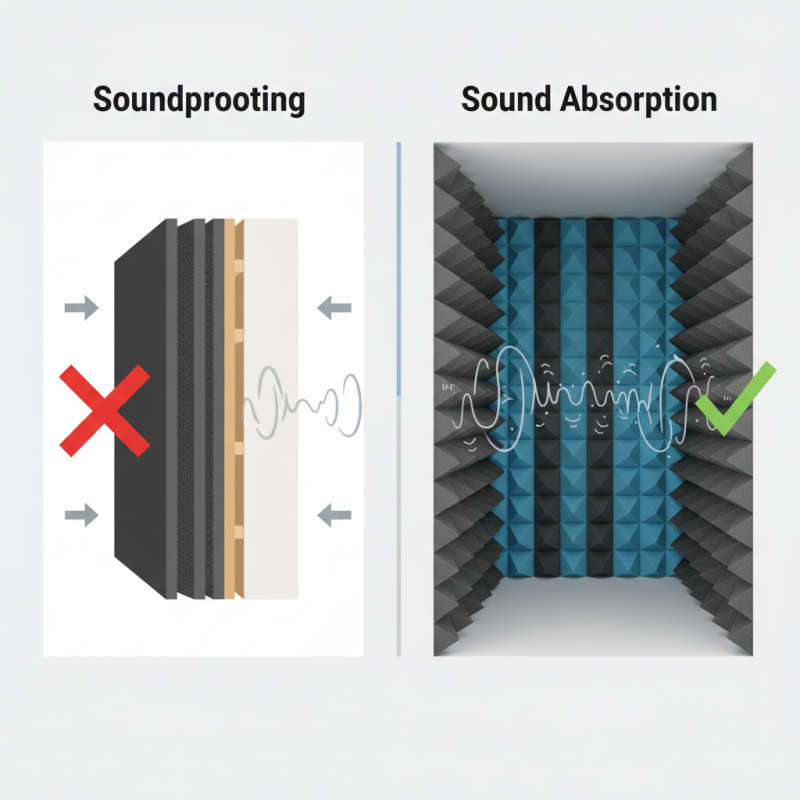
Understanding Soundproofing and Sound Absorption Concepts
Soundproofing and sound absorption serve distinct functions in managing noise. Soundproofing aims to block sound transmission between spaces. This is critical in environments like recording studios and offices. Effective soundproofing materials can reduce decibel levels significantly. According to reports by the National Institute of Standards and Technology, soundproofing can lower noise levels by up to 50 decibels.
On the other hand, sound absorption focuses on reducing echo and improving sound clarity within a room. Absorptive materials, like acoustic panels, help minimize sound reflection. Studies indicate that sound absorption can improve speech intelligibility by over 30%. This makes it vital for environments like theaters and classrooms. Understanding the difference between these concepts can lead to better design choices.
While both techniques share a common goal of improving sound quality, they require different materials and approaches. Not all soundproofing methods are equally effective in sound absorption. This often leads to misunderstandings about their uses. It's essential to evaluate specific needs before deciding. Balancing both methods may yield a more harmonious acoustic environment.
Key Differences Between Soundproofing and Sound Absorption
Soundproofing and
sound absorption serve different roles in managing sound. Soundproofing aims to block sound from entering or leaving a space. It creates barriers that prevent sound waves from passing through walls, floors, or ceilings. This is essential in environments like
recording studios or residential units near busy streets.
On the other hand, sound absorption involves materials that reduce echo and reverberation within a space. Absorptive materials like
acoustic panels or
carpets capture sound waves, preventing them from bouncing off hard surfaces. This method is common in
theaters,
classrooms, and open offices to improve sound quality and clarity.
A mistake many make is confusing these terms. While
soundproofing is about isolation,
sound absorption is about enhancement. Sometimes, a room may need sound absorption even if it’s relatively soundproof. This complexity highlights the importance of understanding each method's unique purpose.
Choosing the right approach depends on specific needs and conditions.
How Soundproofing Works in Blocking Noise
Soundproofing is essential in many environments. It works primarily by blocking sound from one area to another. According to a report from the National Institute of Standards and Technology, soundproofing can reduce noise levels by up to 95% in certain situations. This reduction is achieved through structural barriers, such as walls and windows, designed to reflect or absorb sound waves.
The effectiveness of soundproofing lies in its materials. Dense materials, like concrete or specialized acoustic panels, can significantly reduce sound transmission. The use of soundproof doors and windows can also enhance this effect. Research indicates that using multiple layers of materials can further minimize sound passage. A study showed that double-glazing windows could lower outdoor noise by about 20-30 decibels.
However, achieving optimal soundproofing isn't always straightforward. Factors like construction quality and material arrangement can affect performance. For instance, small gaps or weak points in construction may allow sound to leak through. This suggests an ongoing need for refinement and improvement in soundproofing techniques, as perfect effectiveness is rarely guaranteed. A balanced approach combining robust materials and professional installation can result in the best outcomes.
Mechanisms of Sound Absorption and Its Applications
Sound absorption is a critical mechanism in controlling noise in various environments. It involves materials that capture sound waves, converting energy into small amounts of heat. Common applications include theaters, recording studios, and offices. These spaces often require a quieter atmosphere. Acoustic panels, foam, and carpets are popular choices for effective sound absorption.
In practice, sound absorption is not always perfect. The efficiency of materials can vary greatly. For instance, soft furnishings may absorb high-frequency sounds better than low-frequency ones. In some cases, designers may aim for a balance between sound absorption and reflection. The goal is to create an appealing auditory experience while minimizing unwanted noise.
Certain settings pose challenges. Open-plan offices may struggle with excessive noise levels, despite using absorption materials. It’s essential to evaluate the specific acoustic needs of each environment. Not all solutions will work universally, which requires ongoing adjustments and experimentation. Understanding these mechanisms allows for more effective sound management strategies, leading to more comfortable spaces.
Factors Influencing Effectiveness of Soundproofing vs. Absorption
When considering soundproofing versus sound absorption, several factors come into play. Soundproofing aims to prevent sound from entering a space. In contrast, sound absorption involves reducing sound reflections within a room. A study by the National Institute of Health indicates that appropriate soundproofing can decrease noise by as much as 30 decibels. This difference in function ultimately influences how effective each method is in various settings.
The materials used can significantly affect performance. Heavy, dense materials like concrete are more effective for soundproofing. Conversely, soft materials like carpets or acoustic panels are better for sound absorption. A recent report highlighted that a room with acoustic treatment can reduce reverberation time by 50%. This showcases the need for a tailored approach when deciding on sound management solutions.
Tips: Consider your environment. A high-traffic area may need greater soundproofing. For recording studios, prioritize sound absorption. Evaluating your specific needs is crucial. Ultimately, a balanced strategy that recognizes both soundproofing and absorption is essential for achieving optimal results.
FAQS
: Soundproofing aims to block sound transmission between spaces. It's essential for environments like recording studios and offices.
Sound absorption reduces echo and improves clarity. It uses materials like acoustic panels to capture sound waves.
Acoustic panels, foam, and carpets are popular choices. They help create quieter environments in various settings.
Not necessarily. Soundproofing focuses on isolation, while sound absorption enhances sound quality. They serve distinct functions.
Confusing soundproofing with sound absorption can lead to ineffective solutions. Each method has unique purposes and requirements.
Yes, not all materials absorb sound effectively. Soft furnishings may work better for high frequencies than low frequencies.
It's crucial to assess specific acoustic needs. Solutions may require adjustments and experimentation for optimal results.
Sound absorption can face challenges in open spaces. Noise levels may still be high, calling for ongoing improvements.
Many people think soundproofing alone suffices for good sound quality. Absorption is essential for clear sound as well.
Designers aim for a mix to create a desirable auditory experience while minimizing unwanted noise. It requires careful consideration.
Conclusion
The article "Why is Soundproofing Different from Sound Absorption?" explores the fundamental concepts of soundproofing and sound absorption, emphasizing the key differences between the two. Soundproofing refers to techniques used to block noise from entering or leaving a space, while sound absorption involves materials that absorb sound energy to reduce echo and improve acoustics.
The piece delves into how soundproofing effectively blocks noise through barriers and insulation, while sound absorption utilizes various materials to mitigate sound reflection. Various factors influence the effectiveness of soundproofing versus absorption, including material properties and environmental conditions. This comprehensive overview helps clarify what is the difference between soundproofing and sound absorption, providing valuable insights for those looking to mitigate noise in different settings.

 Dubuild Panel