In today’s corporate environment, open offices are increasingly popular. They promote collaboration and foster a sense of community. However, they often compromise privacy. Employees frequently feel exposed and distracted. This raises a critical question: how to improve privacy in open offices?
Consider the impact of noise and visibility on focus and productivity. Many workers share concerns about sensitive conversations being overheard. It’s essential to strike a balance between openness and privacy. Creating designated quiet zones can offer relief. Additionally, utilizing soundproofing materials may help mitigate distractions.
Employees can benefit from simple adjustments in their workspaces. Using dividers or privacy screens creates personal space. Headphones serve as both a noise barrier and a signal. Reflecting on these factors is crucial. Implementing effective strategies can enhance comfort and well-being in an open office. Privacy shouldn't be an afterthought; it should be a priority.
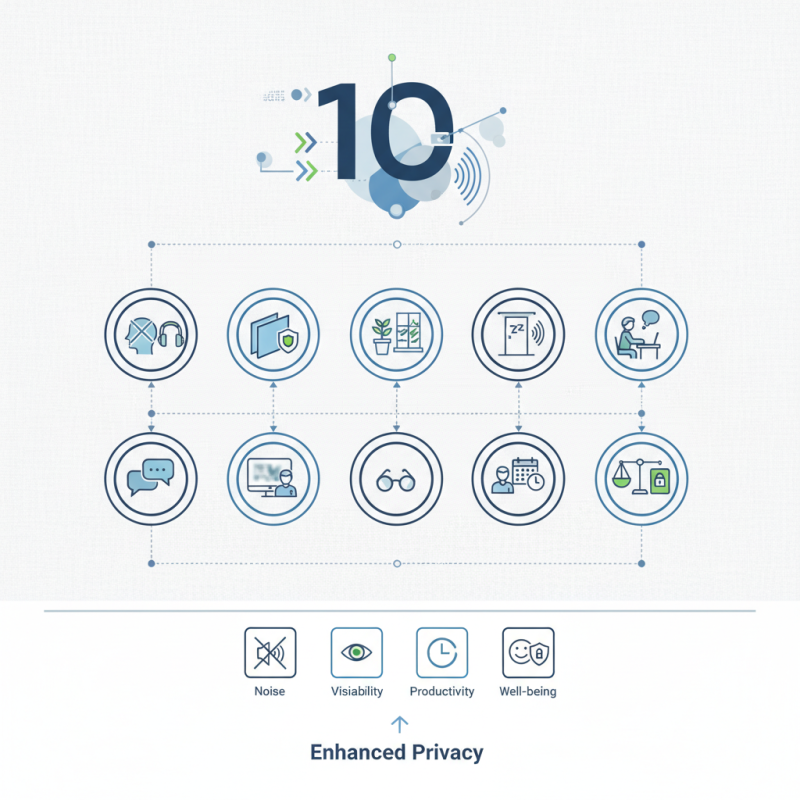
Open office environments present unique challenges for privacy. The layout often encourages collaboration, but it can lead to discomfort. Employees may feel exposed while taking calls or discussing sensitive information. Conversations can easily be overheard, causing anxiety and distrust within teams.
To enhance privacy in these settings, it’s vital to create designated quiet areas. Such retreats allow employees to focus without distractions. Additionally, sound-masking systems can help reduce eavesdropping by softening ambient noise. Implementing flexible work schedules also provides opportunities for employees to work in less populated spaces.
Respecting personal boundaries is essential. Encouraging team members to use headsets or implement "do not disturb" signals can foster a culture of consideration. While these strategies might not completely eliminate privacy concerns, small changes can make a significant impact. Finding balance is an ongoing process that requires attention and adaptability.
In open office environments, privacy often takes a back seat. Statistics show that
70% of employees report distractions in such settings.
Physical barriers can play a crucial role in enhancing personal space and privacy.
Simple solutions like acoustic panels can reduce sound transmission, improving focus.
Studies indicate that spaces with sound-absorbing materials can decrease distractions by about
50%.
Another effective strategy is the use of strategic layout design. Reconfigurable partitions can create semi-private zones. Flexibility in design allows companies to adapt to changing needs.
Research shows that employees working in areas with visible boundaries feel
30% more secure.
These adjustments do not require significant investment and can dramatically improve employee satisfaction.
However, it's important to balance these solutions with flexibility, as too much division can lead to feelings of isolation.
While creating private areas, it is crucial to avoid overcrowding. Space that feels cramped can be counterproductive.
A survey found that 61% of workers prefer a mix of open and closed spaces.
This feedback highlights a need for thoughtful design that accommodates both collaboration and privacy.
Thus, enhancing privacy involves not just physical barriers but also a reflective approach to workspace design.
In open office environments, maintaining confidentiality can be a significant challenge. Technology solutions play a crucial role in enhancing workplace privacy. For instance, sound masking systems can effectively reduce distractions and prevent sensitive conversations from being overheard. These systems emit soft background noise to create a comfortable auditory environment, which encourages productivity while safeguarding information.
In addition to sound masking, secure communication tools are essential. Encrypted messaging apps ensure that employees can share confidential information without the risk of interception. Encouraging the use of these tools fosters a culture of security. However, training employees to understand their importance may require ongoing effort. Not every team member may feel comfortable adopting new technologies, highlighting the necessity for comprehensive onboarding.
Privacy screens on monitors can also help protect sensitive data displayed on screens. This simple yet effective tool limits visibility from an angle, making it harder for onlookers to see proprietary information. While many organizations implement these technologies, some employees may still neglect to use them diligently. Regular reminders and discussions on privacy importance reinforce these practices, urging individuals to remain vigilant in their approach to confidentiality.
In open office environments, respecting colleagues' privacy is vital for a harmonious workplace. Every employee deserves a certain level of confidentiality during meetings and casual conversations. Simple actions can go a long way. For instance, lowering your voice when discussing sensitive topics can prevent eavesdropping. Additionally, consider using headphones to signal that you’re focusing on work. This not only conveys your own boundaries, but it also fosters a culture of respect.
Understanding personal boundaries is key. Everyone has different comfort levels. What feels private for one might not feel the same for another. Observing nonverbal cues, like someone’s body language or facial expressions, can guide your interactions. It’s important to engage in open dialogues about privacy preferences within your team. Encourage colleagues to express their needs regarding workspace boundaries. By fostering this atmosphere, you cultivate mutual respect and collaboration, making the open office less intimidating and more productive.
Bear in mind that mistakes can happen. Sometimes, without realizing it, you might unintentionally intrude on someone’s space or quiet time. Acknowledging these slip-ups and adjusting your behavior can lead to greater awareness. Building an environment that values privacy requires ongoing effort and mindfulness. Each employee plays a crucial role in shaping this culture, emphasizing the importance of etiquette in everyday interactions.
In open office environments, scheduling strategies are crucial for maximizing focus and optimizing shared spaces. A recent study indicated that 70% of employees experience decreased productivity due to distractions in these settings. Utilizing a flexible scheduling system can help alleviate these issues. For example, designating specific "quiet hours" encourages employees to engage in focused tasks without the usual interruptions.
Implementing a booking system for shared spaces can also enhance privacy. Employees can reserve rooms or areas during peak work hours. This approach not only reduces noise but cultivates an atmosphere of respect for personal work preferences. According to the International Facility Management Association, companies that understand and prioritize shared space scheduling see a productivity increase of up to 30%. However, not all open office layouts support these strategies, occasionally resulting in frustration when designated areas are occupied.
Encouraging employees to communicate their preferred working times can further enhance the environment. Regular feedback sessions about scheduling effectiveness can promote a culture of continuous improvement. In essence, while open offices aim to foster collaboration, thoughtful scheduling is essential to maintain productivity and personal space.
| Tip Number | Tip Title | Description | Expected Outcome |
|---|---|---|---|
| 1 | Use Noise-Canceling Headphones | Utilize noise-canceling technology to reduce distractions. | Increased focus and productivity. |
| 2 | Create Quiet Zones | Designate areas in the office specifically for quiet work. | Enhanced concentration in high-focus activities. |
| 3 | Implement Flexible Work Hours | Allow employees to choose when they work for better scheduling. | Reduced congestion and improved personal focus time. |
| 4 | Use Schedule Management Tools | Utilize scheduling apps to manage meeting rooms and shared spaces. | Streamlined usage of communal areas. |
| 5 | Establish 'Do Not Disturb' Signals | Use visual cues such as flags or signs when in deep work mode. | Minimized interruptions during critical tasks. |
| 6 | Encourage Remote Work | Promote working from home where feasible to reduce office crowding. | Increased flexibility and work-life balance. |
| 7 | Plan Office Layout Wisely | Organize the workspace to minimize noise and distractions. | More conducive environment for concentration. |
| 8 | Regularly Review Office Policies | Ensure policies around shared spaces are revisited and improved. | Adaptive strategies that meet evolving needs. |
| 9 | Provide Privacy Screens | Install dividers or screens in open areas for personal space. | Improved personal comfort and reduced distraction. |
| 10 | Host Training Sessions | Educate staff on best practices for maintaining privacy. | A workforce knowledgeable in privacy etiquette. |
: Open offices can lead to discomfort and a feeling of exposure during calls or discussions.
Quiet areas allow employees to focus without distractions, improving comfort and reducing anxiety.
Sound-masking systems soften ambient noise, making it harder to overhear conversations and enhancing privacy.
Acoustic panels can reduce sound transmission, helping employees focus better in open office settings.
Approximately 70% of employees indicate they face distractions in open office environments.
Scheduling helps maximize focus and minimizes distractions in shared work environments.
Designated quiet hours encourage employees to engage in focused tasks without interruptions.
Excessive barriers can create feelings of isolation, counteracting the intended benefits of privacy.
Regular feedback on scheduling ensures a culture of continuous improvement and flexibility.
Around 61% of workers prefer a mix of open and closed spaces for collaboration and privacy.
In today's work environment, open offices pose significant challenges to employee privacy, making it essential to explore how to improve privacy in open offices. Addressing these challenges begins with understanding the unique dynamics of shared spaces, where personal boundaries are often blurred. Implementing physical barriers, such as plants or partitions, can help create designated personal spaces that offer a degree of privacy.
Moreover, integrating technology solutions, such as privacy screens or sound-masking systems, can further enhance confidentiality. Promoting workplace etiquette is crucial; encouraging employees to respect colleagues' privacy can foster a more considerate atmosphere. Lastly, effective scheduling strategies can optimize the use of shared spaces, allowing for focused work periods while minimizing disturbances. Together, these approaches can significantly enhance privacy in open office settings, contributing to a more productive work environment.

Dubuild Panel