Creating high-quality recordings at home can be challenging. Many factors contribute to sound quality, and understanding them is crucial. This article explores how to improve recording sound quality at home, providing practical tips to enhance your setup.
Home studios often lack professional acoustics. Walls, floors, and ceilings can create unwanted echoes or reflections. You might find that simple adjustments in your room make a big difference. For example, adding rugs or curtains can absorb sound effectively. Additionally, choosing the right microphone is essential. The mic you select greatly influences your recordings.
Improving your recording environment is a continuous process. You may not achieve perfect sound right away, and that’s okay. Mistakes are part of learning. Experimenting with different setups can help you identify what works best for you. Each recording session is an opportunity for growth. With patience and practice, you can dramatically enhance your sound quality at home.
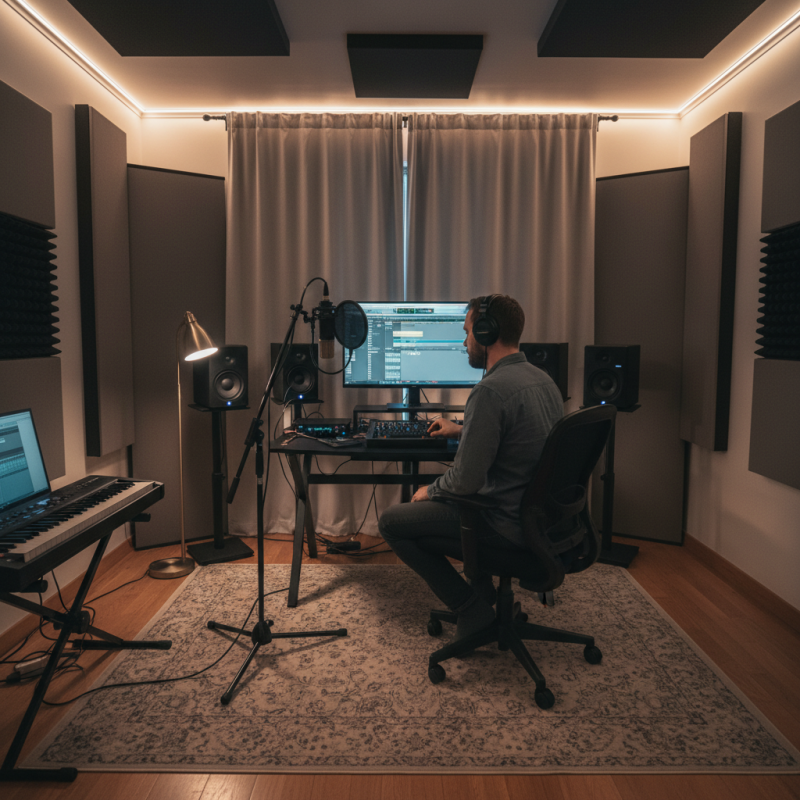
Choosing the right microphone for home recording can significantly impact sound quality. A quality mic captures every nuance of your voice. This accuracy can make or break your recordings. Understanding the different types is essential. Dynamic mics are durable and handle high sound levels well. They are perfect for loud sources like drums or electric guitars. However, they may not pick up the subtleties of a soft acoustic guitar or vocals.
On the other hand, condenser mics are sensitive and deliver rich detail. They are ideal for vocals and acoustic instruments. However, their sensitivity can be a drawback. They may pick up unwanted background noise if your recording space isn’t treated. When selecting a microphone, consider your recording environment. Do you have soundproofing? Are there external noises to account for? Your answers will guide your choice.
Remember that investing in a microphone is just one piece of the puzzle. You might need to experiment with different mics to see what works for you. There’s no one-size-fits-all answer. Each recording situation is unique, and reflecting on your experiences will help you make informed decisions.
Creating a soundproof environment is essential for quality home recording. According to a study by the Acoustical Society of America, sound reflections can increase recording noise by up to 30%. To combat this, focus on treating your room acoustically.
Use heavy curtains on windows to absorb sound. Rugs on hardwood floors can help mitigate noise as well. Adding foam panels on walls can reduce echoes. Proper room design is crucial.
Placement matters. Avoid corners where sound waves can build up. Experiment with mic placement too. Place your microphone away from walls for better clarity. Remember, even minor adjustments can lead to significant improvements.
Regularly assess your setup. You might find that a simple rearrangement enhances your sound. Sometimes, imperfections in your space can lead to unique character in your recordings. Embrace these quirks; they may add depth to your work.
| Tip Number | Tip | Description |
|---|---|---|
| 1 | Acoustic Treatment | Use acoustic panels and bass traps to minimize echo and background noise. |
| 2 | Proper Microphone Placement | Position microphones to capture the best sound without unwanted noise. |
| 3 | Use a Pop Filter | A pop filter helps reduce plosive sounds that can distort recordings. |
| 4 | Control Room Noise | Keep appliances and other electronics off while recording to minimize noise interference. |
| 5 | Choose the Right Interface | Use a high-quality audio interface for better sound conversion and latency control. |
| 6 | Use Quality Cables | Invest in high-quality, shielded cables to reduce the risk of interference. |
| 7 | Record in a Quiet Space | Find a room with minimal outside noise for clear recordings. |
| 8 | Set Appropriate Levels | Ensure recording levels are set correctly to avoid clipping. |
| 9 | Use Monitoring Headphones | Monitor directly with headphones to catch any issues during recording. |
| 10 | Experiment with Sound | Try different settings, positions, and techniques to find the best sound for your recordings. |
To enhance the sound quality of your recordings, proper acoustic treatment is essential. This involves managing sound reflections, absorption, and diffusion within your space. For starters, consider adding foam panels to walls. They reduce echo and help capture clearer audio. Placing these panels at first reflection points can yield noticeable improvements.
Carpets and heavy drapes also play a crucial role. They absorb sound frequencies and minimize background noise. If your room has hardwood floors, adding a thick rug can significantly dampen sound reflections. For better results, focus on corners. Bass traps can help control low frequencies that often build up there.
Experimentation is vital in acoustic treatment. Every room is different. What works for one space might not suit another. Regularly assess the sound quality of your recordings. Note any areas that still feel off. Adjustments may be needed as you learn your space better. This trial-and-error approach can lead to substantial discoveries in sound clarity. Remember, there is always room to refine your setup.
This bar chart illustrates the importance level of various tips to enhance recording sound quality at home. Each tip plays a crucial role in achieving a professional sound, with acoustic treatment and isolation being the most vital aspects of home recording.
Gain staging is crucial for achieving high-quality sound recordings at home. It involves managing the levels of audio signals throughout the recording process. If the levels are too low, you risk increasing background noise. Conversely, excessive levels can cause distortion. According to industry standards, maintaining optimal levels between -18 dBFS and -12 dBFS for digital recordings can help avoid these issues.
Understanding your equipment is key. Mismatched levels between your microphone, interface, and software can lead to poor sound quality. The recommended level for vocals typically sits around -12 dBFS. It’s essential to monitor these levels using metering tools available in most DAWs. Many beginners overlook the importance of proper levels, leading to a lot of frustration during mixing and mastering.
Improper gain staging can ruin an otherwise perfect performance. It is common for home recordists to encounter feedback or harsh tonal qualities when levels peak. Regularly checking your levels during recording ensures that you're capturing the cleanest sound possible. Each recording environment is unique, and it's vital to experiment and learn from mistakes. Keeping a log of what works and what doesn’t will gradually improve your recordings.
Monitoring and editing sound quality at home requires careful attention. Good monitoring begins with the right headphones or speakers. These tools help you hear subtle details. You want clarity while mixing your tracks. Use a flat frequency response to avoid colored sound. This will ensure that the audio mixes well across different playback devices.
Editing is equally vital for enhanced sound quality. First, focus on your rough cuts. Remove any unwanted noise or flaws that can distract. This takes precise listening. Use software tools wisely to enhance tonal balance. Adjusting levels is a common yet critical step. Watch for peaks that can cause distortion. Aim for a well-rounded sound, but imperfections can remain. They show your unique touch, providing character to your recordings.
Lastly, consider room acoustics. Reflective surfaces may misjudge what you're hearing. Use blankets or foam panels to tame unwanted echoes. Trust your instincts while listening; if something feels off, address it. Each session is a learning opportunity, inviting improvement. Embrace the process and enjoy the journey of sound creation.
: Consider your recording needs. Dynamic mics are good for loud sounds, while condenser mics excel at capturing detail.
Dynamic mics handle high sound levels. They are excellent for instruments like drums and electric guitars in loud environments.
Condenser mics are sensitive. They may pick up background noise if your recording space isn’t adequately treated.
Use heavy curtains and rugs to absorb noise. Foam panels on walls help reduce echoes, improving your recording quality.
Mic placement affects clarity. Position the microphone away from walls and experiment to see what sounds best in your space.
Maintain levels between -18 dBFS and -12 dBFS. Proper gain staging prevents noise and distortion in your recordings.
Many neglect proper levels, causing frustration during mixing. Regularly monitor levels to capture clean sound without distortion.
Simple rearrangements can enhance sound quality. Regular assessments may reveal new strategies to improve your recording environment.
Yes, reflecting will help you learn. Embrace imperfections; they can add unique character to your recordings over time.
To improve recording sound quality at home, it is essential to start by choosing the right microphone that suits your recording needs. Different microphones capture sound in unique ways, and selecting one that aligns with your recording type can significantly enhance the quality. Additionally, creating an ideal recording environment is crucial; this involves minimizing background noise and ensuring proper sound isolation.
Utilizing acoustic treatment techniques, such as soundproofing and using acoustic panels, can further refine the audio quality by reducing reflections and reverberations. Understanding gain staging and maintaining optimal levels ensures that your recordings are clear and free from distortion. Lastly, effective monitoring and editing practices, including the use of quality headphones or studio monitors, can facilitate the enhancement of your final sound quality. By implementing these strategies, you will learn how to improve recording sound quality at home effectively.

Dubuild Panel