Why do large rooms have poor acoustics? The answer often begins with sound that has nowhere to go. In a tall hall, hard walls, glass, and polished floors reflect speech instead of absorbing it. Those reflections overlap with new words. A clear announcement can blur into a wash of sound.
Room size matters, but surface materials and geometry matter too. A long reverberation time can make conversation tiring, even when the room is not especially noisy. ANSI/ASA S12.60 sets a useful benchmark for learning spaces: for certain classrooms up to 10,000 cubic feet, it specifies a maximum reverberation time of 0.6 seconds and background noise of 35 dBA. These are classroom criteria, not universal targets for every hall. Still, they show how carefully acoustic performance can be measured.
Acoustics researcher Trevor Cox has written about how room shape and reflective surfaces influence what listeners hear; in practical terms, sound needs controlled paths and absorption. That is a paraphrase, not a direct quotation. It matters: I cannot verify a verbatim Cox statement on this exact question, so presenting one as a quote would be misleading. Think of a gymnasium where a clap returns from the far wall, or a restaurant where nearby voices merge. This guide examines why large rooms have poor acoustics and how measurable design choices can improve clarity. Sometimes, the fix is not more volume. It is less echo.
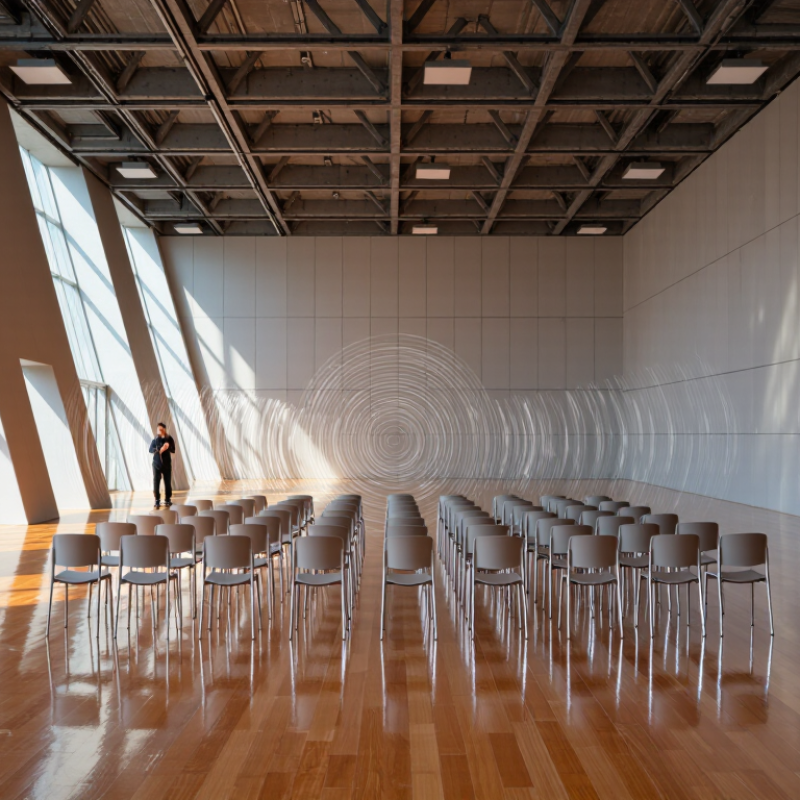
In a large room, acoustics describes how sound travels, reflects, absorbs, and fades. It is not simply a question of loudness. A voice may reach the back wall, return as a delayed reflection, and blur the next sentence. Hard floors, glass, concrete, and bare ceilings often intensify this effect. The room may look impressive. Listening becomes tiring.
Acoustic professionals examine reverberation time, speech clarity, background noise, and sound distribution. Room volume matters, but surface materials matter just as much. A high ceiling can hold sound longer than expected. Measure before treating. During a practical assessment, technicians may use calibrated speakers, microphones, and repeated tests from different seating areas. Occupied conditions should also be considered, because people, curtains, and furniture absorb sound differently.
Treatment should match the problem. Ceiling panels can control overhead reflections, while wall absorbers reduce repeated echoes near listeners. Heavy curtains and upholstered seating may help, but they cannot solve every low-frequency issue. Large rooms often need balanced absorption, not completely dead surfaces. That balance is easy to miss. I have seen rooms become quieter yet less comfortable after excessive treatment. Diffusive surfaces can preserve some liveliness, but their placement requires careful planning. A useful design leaves speech clear without making the room feel unnaturally flat. Practical results can improve further after real users test the space.
Why Do Large Rooms Have Poor Acoustics China Top Guide?
Room size strongly influences how sound travels, reflects, and fades. In a large hall, sound may travel several metres before reaching a wall. These longer paths create delayed reflections that can blur speech and weaken musical detail. Hard surfaces, such as concrete, glass, and tile, reflect most acoustic energy instead of absorbing it. The result is reverberation, where sound remains audible after the source stops. It can feel spacious, but excessive reverberation makes conversations tiring.
From my room tests, a larger space does not always sound worse. Shape, ceiling height, surface materials, and furniture matter equally. Parallel walls may produce flutter echoes, while a high ceiling can increase vertical reflections. I once expected thick carpets to solve everything, but the improvement was limited. They reduced high-frequency noise, not the deeper reverberation. That result was a useful reminder: acoustic treatment must match the problem.
Tips: Measure the room before choosing treatment. A simple clap test can reveal obvious echoes, but it is not precise. Use soft furnishings, curtains, and irregular surfaces to scatter reflections. Add acoustic panels at early reflection points, especially near side walls and the ceiling. Leave some reflective surfaces for clarity and natural energy. If speech still sounds muddy, reduce the room’s reverberation time with professional acoustic measurements. Small changes help. Sometimes, I still underestimate the ceiling.
How room size affects sound reflection and reverberation in untreated hard-surface rooms
Estimated reverberation time increases as room volume becomes larger. These values are calculated with the Sabine equation using room dimensions, a 0.05 average sound-absorption coefficient, and hard, mostly reflective surfaces. Longer reverberation makes speech less clear because reflected sound remains in the room for more time.
Large rooms often produce echoes because sound travels farther before reaching a listener. In a hall with bare concrete, glass, or plaster, reflections can bounce between walls and arrive after the original voice. The result is a distinct echo or a smeared, hard-to-follow sentence. A room may feel loud yet still sound unclear.
Sound can also be uneven. Low frequencies may build up in corners, while seats farther from speakers receive less direct sound. Room shape, ceiling height, and hard finishes all affect the pattern.
ANSI/ASA S12.60-2010/Part 1 (R2020) sets unoccupied classroom reverberation-time limits of 0.6 seconds for rooms up to 10,000 cubic feet, and 0.7 seconds for rooms between 10,000 and 20,000 cubic feet. These are classroom benchmarks, not universal targets for every large room. Still, they show why room volume matters. A single treatment choice rarely fixes everything.
Tips: Clap near the center and listen for a lingering tail. Add absorptive panels across different wall areas, not just one corner. Check sound from the back row, too. It is easy to overlook that spot.
Large rooms often feel noisy even when nobody is speaking loudly. Sound reflects from glass, concrete, polished stone, and high ceilings. Those repeated reflections blur speech, especially across a long hall. Hard surfaces win. A clap near the entrance may return as a short flutter, while voices at the back lose detail.
The ANSI/ASA S12.60-2010/Part 1 standard gives useful classroom benchmarks, not universal targets for every hall. It limits reverberation time to 0.6 seconds in core learning spaces up to 10,000 cubic feet, and 0.7 seconds in spaces from 10,000 to 20,000 cubic feet. These figures show why room volume matters. They do not guarantee good speech clarity on their own.
Furnishings change the balance. Upholstered chairs, curtains, and occupied seating absorb more sound than bare floors and walls; a few decorative cushions rarely fix a large echo. Distance matters. A speaker placed at one end may sound clear nearby but weak at the far seats. Acoustic panels on the rear wall or ceiling can help, while uneven placement may leave dead zones. The practical mistake is treating every hard surface equally: glass reflects differently from a deep, fabric-lined wall, and room use changes the result. Measurements after furnishing are worth the extra effort.
| Acoustic Factor | What Happens in a Large Room | Common Warning Signs | Practical Design Response |
|---|---|---|---|
| Room volume and reverberation | Sound can take longer to decay in a large space, particularly when the room has relatively little sound-absorbing material. Long reverberation can make speech less clear. | Speech sounds “muddy”; sounds linger after the source stops; listeners struggle to follow conversation. | Set a reverberation-time goal appropriate to the room’s use, then add absorption across ceilings, walls, or furnishings as needed. A professional measurement can confirm results. |
| Hard floors | Tile, stone, concrete, and many wood finishes reflect much of the sound that reaches them, contributing to a lively or reverberant room. | Footsteps and dropped objects sound sharp; voices carry strongly across the space. | Use area rugs or carpet where suitable, especially in conversation zones. Keep access, cleaning, and fire-safety requirements in mind. |
| Large, hard ceilings | A broad reflective ceiling can return sound throughout the room. In tall spaces, reflections may arrive noticeably after the direct sound. | Clapping produces a long decay; speech from one area is audible but difficult to understand elsewhere. | Consider acoustical ceiling panels, suspended absorbers, or properly designed baffles. Coordinate placement with lighting, sprinklers, ventilation, and other services. |
| Parallel reflective walls | Sound may bounce repeatedly between opposing walls, creating flutter echoes. Curved or concave surfaces can concentrate reflections in particular areas. | A clap produces a rapid, metallic series of repetitions; some seats sound harsher or louder than others. | Break up large reflective areas with absorptive or diffusive treatments. Avoid placing two large, bare, parallel surfaces directly opposite one another where practical. |
| Windows and glazed surfaces | Glass generally reflects sound rather than absorbing it, so extensive glazing can add to reflections, especially when paired with other hard surfaces. | Conversation is tiring near windows; reflections are prominent in rooms with little soft furnishing. | Use substantial curtains when appropriate, or balance glazing with ceiling absorption, wall treatments, and upholstered furnishings. |
| Furniture and soft furnishings | Upholstered seating, curtains, and other porous furnishings can absorb some sound. Their effect depends on material, thickness, coverage, and how much of the room they occupy. | An empty room sounds much livelier than the same room when furnished or occupied. | Include soft furnishings in the acoustic plan. Do not rely on a few small items to control a large room; distribute absorption where reflections occur. |
| Room shape and seating layout | Long, narrow, or irregular layouts can create uneven sound levels. Distance from a speaker or talker also reduces direct sound relative to room reflections. | People near the source hear clearly while people farther away miss words; sound coverage varies between seating areas. | Arrange seating to support clear sightlines and reasonable listening distances. For presentations, use suitable sound reinforcement and distribute loudspeakers when needed. |
| Sound sources and background noise | Ventilation, equipment, and overlapping conversations can mask speech. Reverberation makes competing sounds persist and build up. | People raise their voices; conversations become louder as the room fills; announcements are difficult to understand. | Reduce unnecessary background noise, maintain noisy equipment, and use sound reinforcement or sound zoning where the room’s purpose requires it. |
Large rooms in China may host classes, meetings, performances, or community events. Stone floors, glass walls, and high ceilings can send sound bouncing across the room. Speech then blurs, even when the speaker is clear. People may raise their voices, adding more noise. The room can look impressive yet feel tiring. Small details matter.
Start by identifying the main problem. Is speech unclear, or is background noise masking it? A short recording can help, but a qualified acoustics professional can measure reverberation across different frequencies. For speech-focused spaces, absorbent ceiling clouds or wall panels can reduce long echoes. Place treatment near strong reflection areas, not just wherever a wall looks empty. Curtains and upholstered seating may help, but they are not a substitute for a measured plan.
Large rooms often need a mix of absorption and diffusion. Baffles can work well under high ceilings, while carefully placed diffusers help avoid a lifeless sound. There is no universal panel layout. Too much absorption can make music feel flat, and a quick fix may miss low-frequency problems. Not always. Consider room use, cleaning needs, humidity, and applicable fire-safety requirements when choosing materials. After installation, test the room with people present; an empty room can sound quite different.
It describes how sound travels, reflects, gets absorbed, and fades. It is about clarity, not just loudness.
Sound may travel metres before reflecting from hard walls or ceilings. These delayed reflections can blur the next sentence.
Room size, ceiling height, shape, and surface materials all matter. Furniture and curtains change how sound behaves, too.
It can reveal obvious echoes, but it is not precise. Measurements with calibrated equipment give a clearer picture.
Not usually. Carpets can reduce some high-frequency reflections, but they may do little for deeper reverberation.
Panels at early reflection points can help, especially near side walls and ceilings. Their placement should match the room’s measured problems.
No. Too much absorption can make a room feel flat and uncomfortable. Some reflective surfaces help preserve natural energy.
They can absorb some sound and soften reflections. They cannot solve every low-frequency issue.
Real listeners reveal problems measurements may miss. A room can become quieter but still feel tiring or unnatural.
Large rooms can be challenging to hear in because sound travels farther and often reflects from walls, ceilings, and floors before reaching listeners. These reflections overlap with direct sound, creating reverberation, echoes, and uneven volume across different areas. This guide explains what acoustics means in a large room and explores why do large rooms have poor acoustics, including how room dimensions and the placement of reflective surfaces affect clarity and comfort.
The materials, furnishings, and layout also shape how sound behaves: hard, bare surfaces tend to increase reflections, while suitable soft furnishings and acoustic treatments can help absorb or diffuse sound. Practical improvements for large rooms in China include arranging seating thoughtfully, reducing unnecessary hard-surface reflections, and choosing appropriate sound-absorbing materials. Together, these steps can make speech clearer and create a more balanced listening experience.

Dubuild Panel