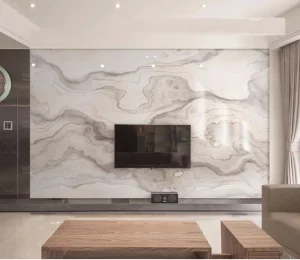
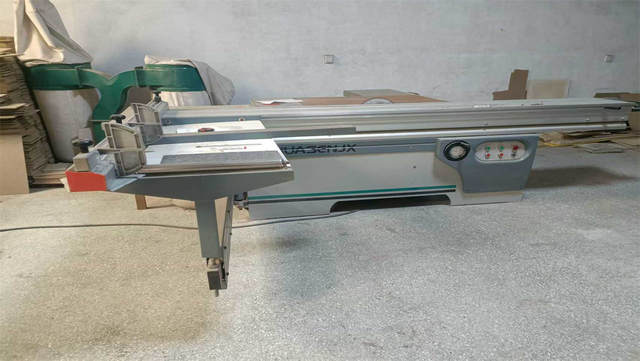
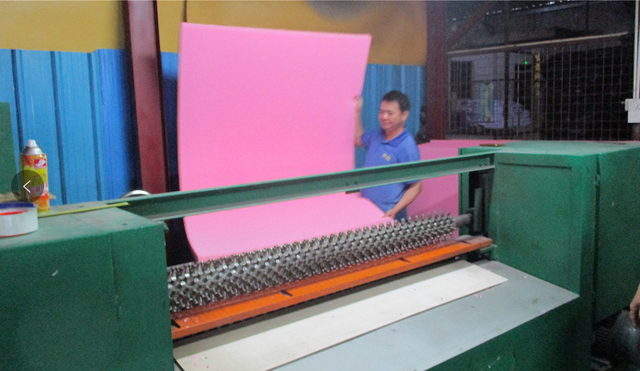
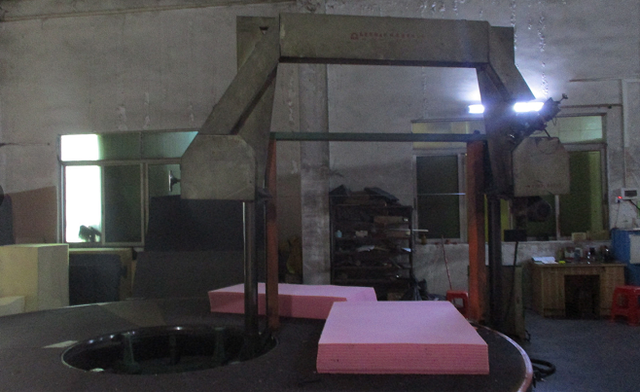
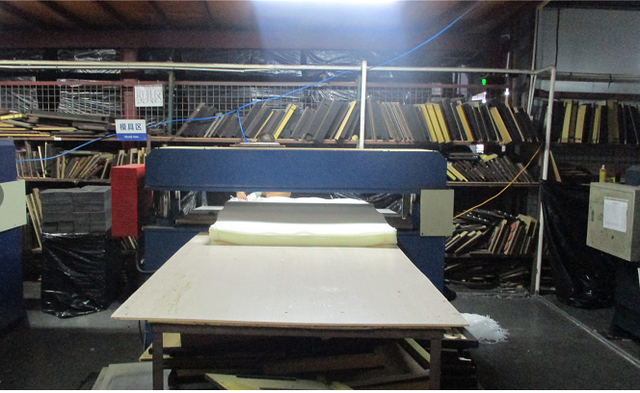
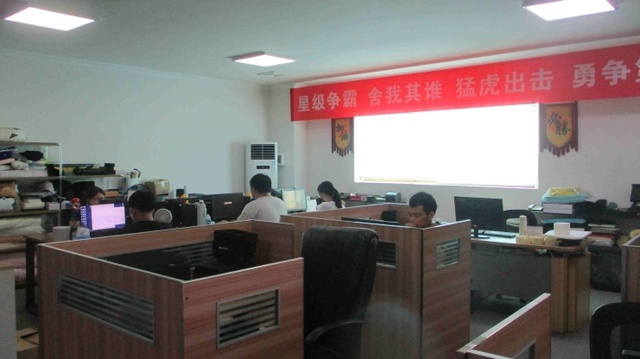
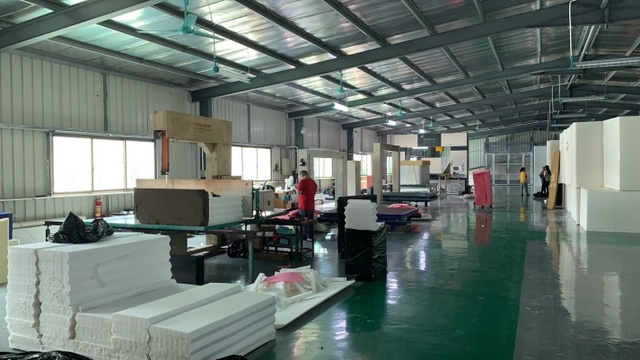
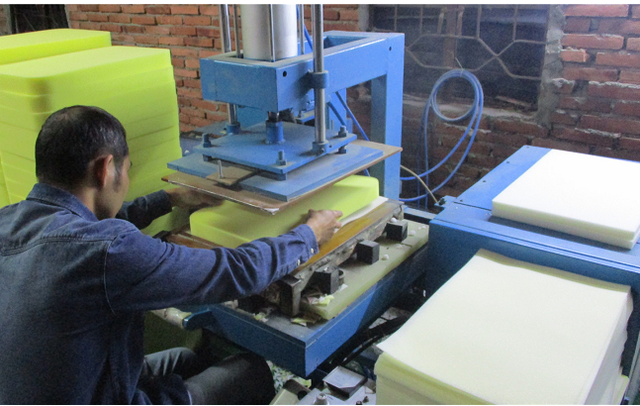
Dongguan Dubuild Panel Co., Ltd. is a professional Acoustic Wall Panel Manufacturer specializing in the design, development, and production of high-performance soundproof panels and noise control solutions for global markets. With its manufacturing base located in the dynamic industrial hub of Dongguan, China, Dubuild Panel integrates advanced production technology, strict quality control, and innovative acoustic engineering to deliver products that meet diverse architectural and environmental needs.
The company’s core product portfolio includes a wide range of acoustic wall panels, sound-absorbing boards, and noise-reduction systems tailored for commercial, residential, hospitality, and institutional applications. These solutions are engineered to improve interior sound quality by minimizing echo, reducing noise transmission, and enhancing acoustic comfort in spaces such as offices, studios, auditoriums, conference rooms, and public venues.
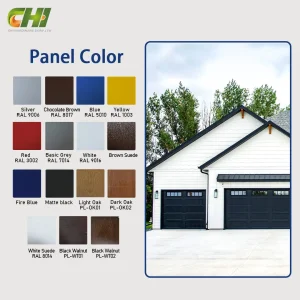
Committed to excellence, Dubuild Panel emphasizes customization and performance, offering clients flexible design options, material selections, and finishes that align with both functional and aesthetic requirements. With a focus on sustainability, the company utilizes environmentally responsible materials and adheres to international standards throughout its manufacturing process.
Through its dedication to innovation, quality, and customer satisfaction, Dongguan Dubuild Panel Co., Ltd. has established a reputation as a reliable partner for architects, designers, and acoustic professionals seeking effective noise control and superior acoustic solutions.
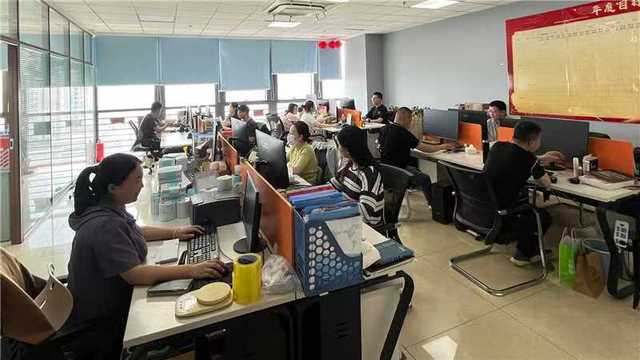
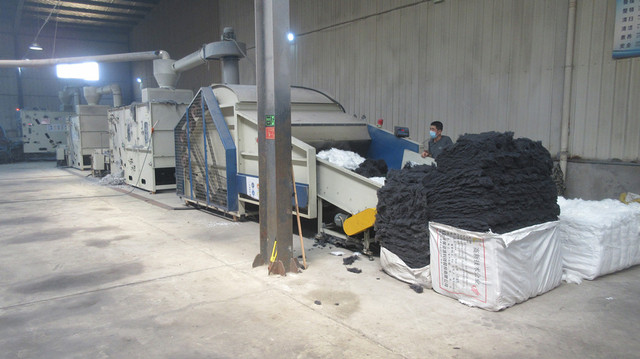
Increasing urbanization and rising environmental noise regulations drive demand for advanced noise-absorbing panels. Modern offices, education zones, and production facilities now integrate acoustic calculations during their initial layout phases to secure wellness certifications.
International construction paradigms like LEED, BREEAM, and the WELL Building Standard enforce limits on spatial reverberation times (RT60). Soundproof components constructed from recycled PET polyester fibers or bamboo charcoal wood veneers gain carbon credits.
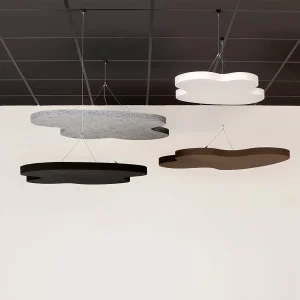
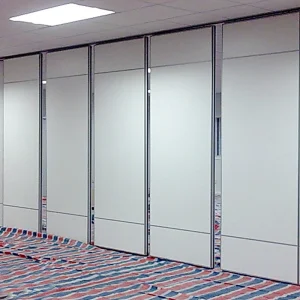
Flexible workspace structures require adaptive sound barriers. Modular phone booths, sliding partition walls, and suspended PET baffles allow operators to adjust open spaces into private rooms without permanent structural shifts.
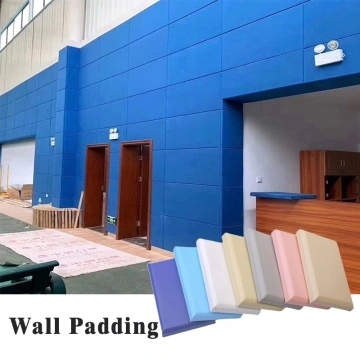
Acoustic energy enters the porous micro-structure of high-density polyester fiber, transforming sound waves into heat energy via friction.
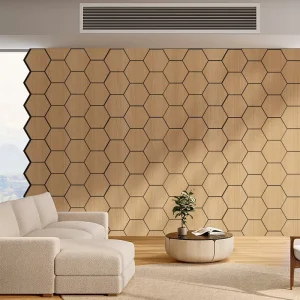
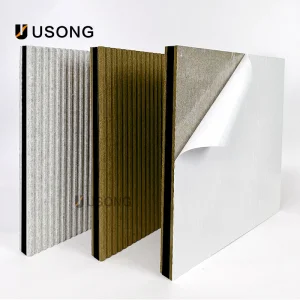
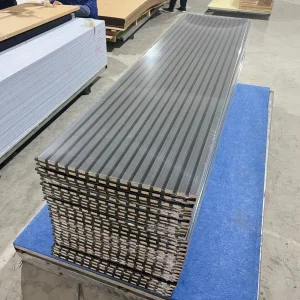
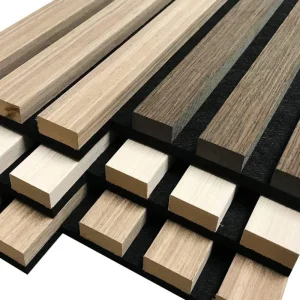
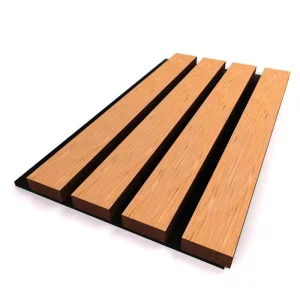
Engineered multi-layer panel structures (such as wood veneered slats backed by PET felt) trap low-to-mid range frequencies in structural air gaps.
Calculated 3D geometric reliefs scatter reflection paths, reducing flutter echoes and improving spatial speech intelligibility scores.
Integrating fire-retardant ASTM E84 Class A compounds and antimicrobial features directly into the raw composite materials.
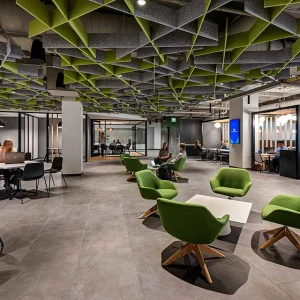
Reverberant open plans generate cognitive fatigue. Deploying soundproof wood veneer slats on walls and installing PET false ceiling systems reduces sound propagation across workstations, stabilizing localized noise.
HVAC systems, generators, and heavy machinery require structural isolation barriers. Multi-layer insulation boards combined with metal acoustic grid systems isolate source emissions, protecting operator hearing zones.
Lecture halls and recording booths demand precise decay times (RT60 under 0.6 seconds). Custom 3D diffusers and high-coefficient acoustic panels regulate standing wave reflections to achieve linear monitor calibration.
 Dubuild Panel