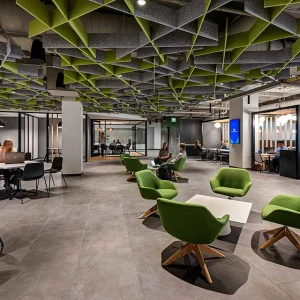
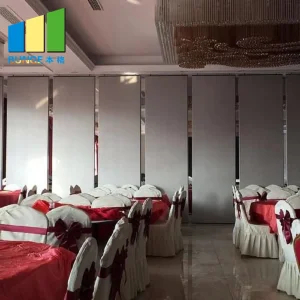
Explore our state-of-the-art catalog featuring high-performance architectural systems engineered for acoustic absorption, attenuation, and architectural isolation.
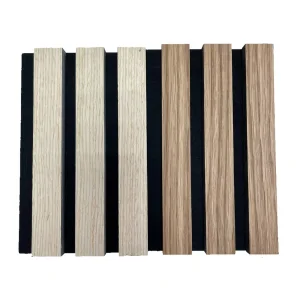
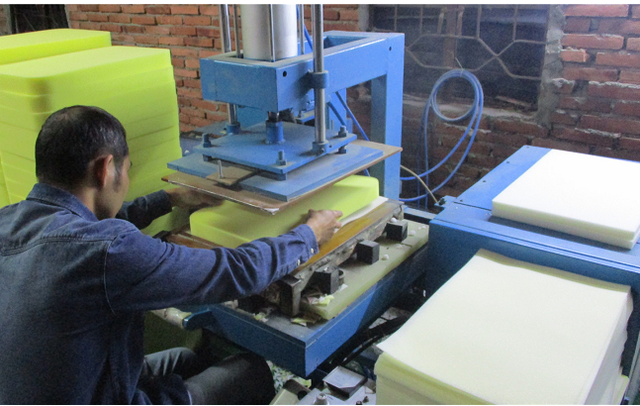
Dongguan Dubuild Panel Co., Ltd. is a professional Acoustic Wall Panel Manufacturer specializing in the design, development, and production of high-performance soundproof panels and noise control solutions for global markets. With its manufacturing base located in the dynamic industrial hub of Dongguan, China, Dubuild Panel integrates advanced production technology, strict quality control, and innovative acoustic engineering to deliver products that meet diverse architectural and environmental needs.
The company’s core product portfolio includes a wide range of acoustic wall panels, sound-absorbing boards, and noise-reduction systems tailored for commercial, residential, hospitality, and institutional applications. These solutions are engineered to improve interior sound quality by minimizing echo, reducing noise transmission, and enhancing acoustic comfort in spaces such as offices, studios, auditoriums, conference rooms, and public venues.
Committed to excellence, Dubuild Panel emphasizes customization and performance, offering clients flexible design options, material selections, and finishes that align with both functional and aesthetic requirements. With a focus on sustainability, the company utilizes environmentally responsible materials and adheres to international standards throughout its manufacturing process.
Through its dedication to innovation, quality, and customer satisfaction, Dongguan Dubuild Panel Co., Ltd. has established a reputation as a reliable partner for architects, designers, and acoustic professionals seeking effective noise control and superior acoustic solutions.
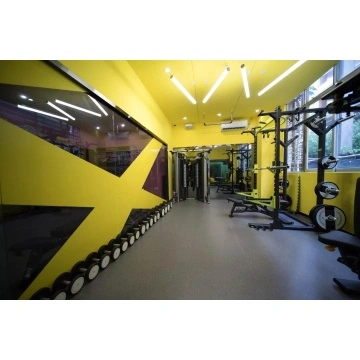

The global market for commercial and industrial acoustic ceiling solutions has undergone a paradigm shift. In modern architectural engineering, sound mitigation is no longer treated as a post-construction corrective measure. Instead, it is integrated directly into the initial phase of structural planning. Rapid urbanization, strict municipal environmental regulations (such as OSHA noise exposure limits in the United States and the EU Directive 2003/10/EC), and the emergence of wellness-focused building standards like WELL and LEED have collectively propelled acoustic management to the forefront.
Currently, the demand for acoustic ceiling solutions spans across high-density urban environments, industrial factories, high-speed rail terminals, and corporate workspaces. Industrial facilities require heavy-duty sound mitigation systems to control reverberant fields and prevent hearing impairment in workforces, while commercial developments rely on acoustic solutions to foster productivity, speech privacy, and concentration.
Architects now prioritize materials that provide dual functionalities: high-efficiency sound attenuation alongside industry-certified thermal resistance and structural fire protection. Modern acoustic ceiling tiles must deliver high Noise Reduction Coefficient (NRC) values without sacrificing aesthetics or sustainability profiles.
Global supply chains are shifting toward bio-based or highly recycled raw materials. Post-consumer Polyethylene Terephthalate (PET) fibers derived from recycled plastic bottles are replacing traditional mineral fibers. These panels are non-toxic, lightweight, and carry low volatile organic compound (VOC) profiles, contributing significantly to green building credentials.
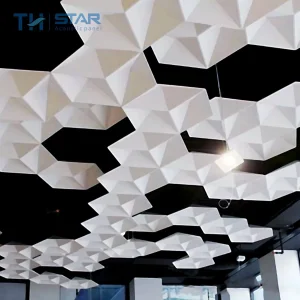
Traditional white grid lay-in tiles are being superseded by monolithic plasterboard-like acoustic ceilings, custom linear baffles, and modular geometric sound-absorbing tiles. Advanced CNC routing allows acoustic manufacturing facilities to carve complex patterns, offering signature branding options for corporate headquarters and creative studios.
Building codes now mandate that acoustic solutions offer superior fire behavior (such as compliance with Class A rating under ASTM E84 or Class B-s1, d0 under EN 13501-1) and seismic stabilization systems. This ensures that ceiling components remain structurally intact during major stress events.
Acoustic requirements vary dramatically across physical structures. Applying a generic solution to diverse spaces often results in suboptimal acoustical performance or code non-compliance. Below is an engineering overview of localized implementations:
| Physical Space | Primary Acoustic Challenge | Ideal Architectural Solution | Target Metric |
|---|---|---|---|
| Open-Plan Offices | Cross-talk, high background noise, low speech privacy | High NRC Polyester Baffles & Acoustic Partitions | NRC ≥ 0.85; RT60 ≤ 0.6s |
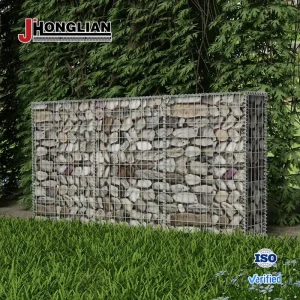
| Industrial Factories | Machinery noise propagation, high reverberant fields | Suspended Basalt Rockwool Baffles & Mesh Barriers | Noise Attenuation ≥ 15 dB |
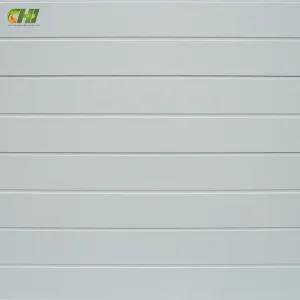
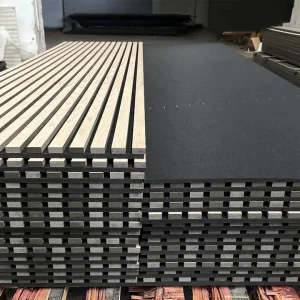
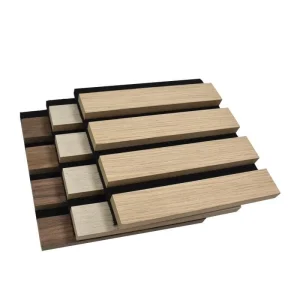
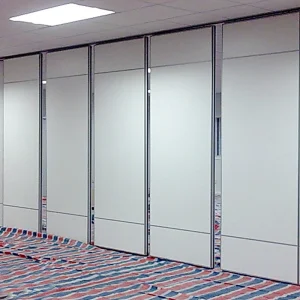
| Hospitality & Hotels | Sound transmission between conference halls | Movable Partition Walls & Acoustic Slat Cladding | STC / Rw ≥ 50 dB |
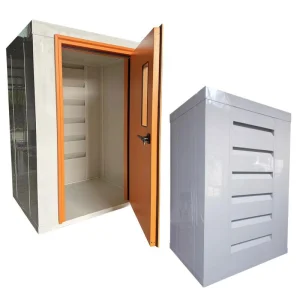
| Anechoic Chambers | Reflections, external structure-borne vibration | Wedge Wall Systems & Silent Ventilation Plenums | Background Noise ≤ 15 dBA |
For precision testing facilities, the presence of reflections can invalidate measurements. These rooms require specialized high-density polyurethane wedges combined with decoupled mechanical structures. The integration of specialized Anechoic Room Ventilation Systems ensures continuous airflow while maintaining background noise levels below critical sensory thresholds.
In these spaces, speech intelligibility is the primary metric. Installing too much absorption can deaden the room, making it difficult for speakers' voices to project. A balanced application of perforated wooden timber acoustic panels on the rear walls combined with sound-absorbing clouds on the ceiling manages early reflections while maintaining the necessary direct-path sound energy.
The next decade of acoustic manufacturing will be defined by smart materials, manufacturing efficiency, and life-cycle carbon tracking. The evolutionary roadmap of acoustic ceilings includes three key advancements:
Ongoing research into electro-acoustic metamaterials suggests that future ceiling panels could dynamically adjust their acoustic absorption properties. By applying low-power electrical impulses to specialized polymer membranes, spaces can transition from high-reflection (for acoustic instruments) to high-absorption (for speech recording) on demand.
Leading factories are replacing synthetic binders with bio-based alternatives derived from agricultural by-products. This shift reduces the embodied carbon of products like mineral wool and polyester panels, aligning with global net-zero carbon building mandates.
Additionally, the integration of 3D manufacturing processes allows factories to print complex acoustic structures with internal Helmholtz resonators directly onto partition boards and ceiling panels. This technology optimizes acoustic performance at targeted problematic low frequencies without adding excess weight.
Delivering an optimal acoustic environment requires a systematic approach to structural design. A comprehensive noise control strategy generally includes three key principles:
Acoustic architects utilize predictive software to run Ray-Tracing and Finite Element Method (FEM) simulations. This matches product properties (such as flow resistivity, thickness, and mounting depth) with the targeted acoustical performance of the building.
Answers to critical technical questions regarding architectural acoustic design, material standards, and structural testing.
NRC measures the amount of sound energy absorbed by a material when sound waves strike its surface. It ranges from 0.0 (total reflection) to 1.0 (total absorption). STC, on the other hand, measures how well a building partition (such as a wall, floor, or ceiling) attenuates airborne sound transmission between two enclosed spaces. In simple terms, NRC is for controlling sound quality inside a room, while STC is for blocking sound from traveling between rooms.
Polyester fiber panels are made from non-toxic, recycled PET materials and do not shed micro-fibers, which can cause skin irritation or respiratory discomfort. This makes them highly suitable for spaces with strict indoor air quality (IAQ) and safety requirements, such as classrooms, clinics, and offices.
The mounting method significantly alters the effective absorption profile. Mounting A refers to panels flush-mounted directly against the boundary wall, which is effective for high-frequency attenuation. Mounting E-400 introduces a 400mm air gap behind the panel, creating a resonant cavity that substantially improves the absorption of lower frequencies.
For public spaces, local building codes generally mandate a Class A fire rating under ASTM E84 (flame spread index ≤ 25, smoke developed index ≤ 450) or European Standard EN 13501-1 Class B-s1, d0. These ratings ensure the materials will not contribute significantly to the propagation of fire or smoke.
Absorption panels remove sound energy from the room by converting it into heat, which can make a room sound quieter but sometimes acoustically dead. Diffusers redistribute sound energy evenly throughout the space by scattering reflections. This controls flutter echoes while maintaining a natural, open, and lively acoustic environment.
Acoustic partitions are primarily designed to control airborne sound transmission (such as speech). Structure-borne noise (like impact vibrations from heavy equipment or footsteps) travels through the building's structural frame and requires decoupling systems, vibration isolation mounts, or floating floor systems to achieve effective attenuation.
Browse our secondary collection of custom wall treatments, decorative baffles, and modular commercial partition walls.
 Dubuild Panel