Engineered to satisfy stringent global architectural acoustics, industrial noise abatement standards, and eco-friendly building codes.
Analyzing key structural shifts in commercial building codes, sustainable material adoption, and high-density industrial sound control.
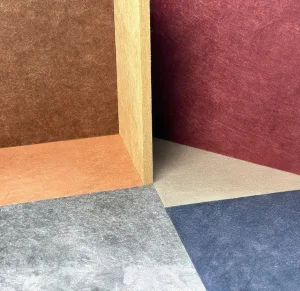
Global architecture firms are standardizing on low-carbon building envelopes. Recycled Polyester Fiber (PET Felt) acoustic panels manufactured from post-consumer plastics have emerged as the primary alternative to traditional mineral wool, delivering high sound absorption without fiber erosion or toxic binders.
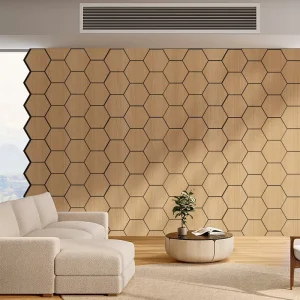
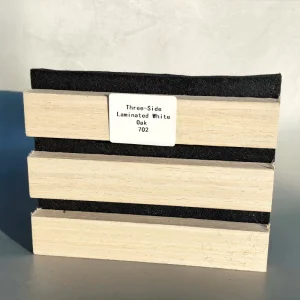
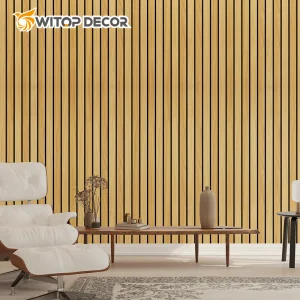
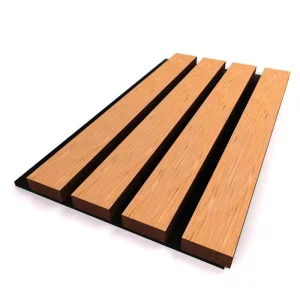
Modern interior design demands functional dualism. Products such as 3D Wood Slat WPC panels and carved acoustic tiles bridge aesthetic luxury with acoustic treatment, allowing commercial space planners to control reverberation times (RT60) while maintaining striking visual architecture.
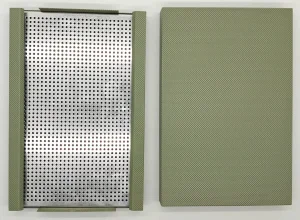
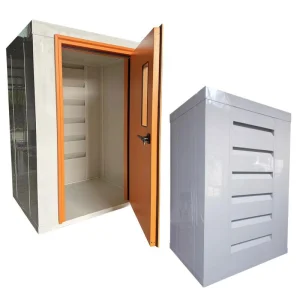
Hyper-scale data centers, automated manufacturing facilities, and urban transit hubs require rugged industrial acoustic dampening. Metal microperforated panels and heavy-duty enclosures are expanding rapidly to mitigate low-frequency equipment hum and satisfy municipal environmental noise mandates.
How top-tier Chinese acoustic manufacturing hubs mitigate supply chain risks, guarantee compliance, and deliver structural cost efficiencies.
International procurement managers, acoustic consultants, and general contractors frequently encounter quality bottlenecks when sourcing acoustic materials globally. The primary challenge lies in verifying actual Noise Reduction Coefficient (NRC) and Sound Transmission Class (STC) ratings against third-party laboratory certifications.
Leading Chinese acoustic manufacturing ecosystems resolve these bottlenecks through integrated manufacturing lines that implement strict raw material screening, CNC micro-perforation precision, and batch-tested acoustic impedance tube evaluations. By supplying verified lab test reports adhering to ISO 354 and ASTM C423, tier-1 suppliers remove procurement uncertainty.
A global leader in high-performance soundproof panels, architectural acoustics, and bespoke industrial noise control engineering.
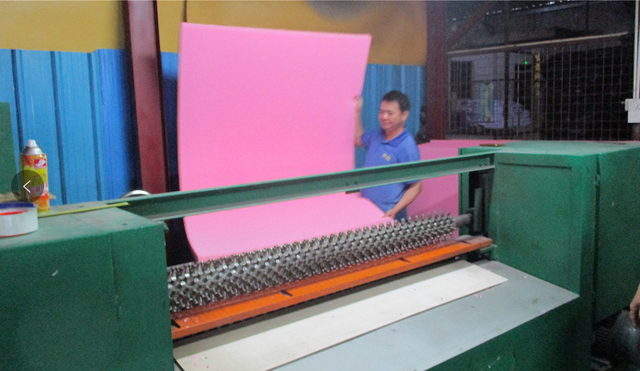
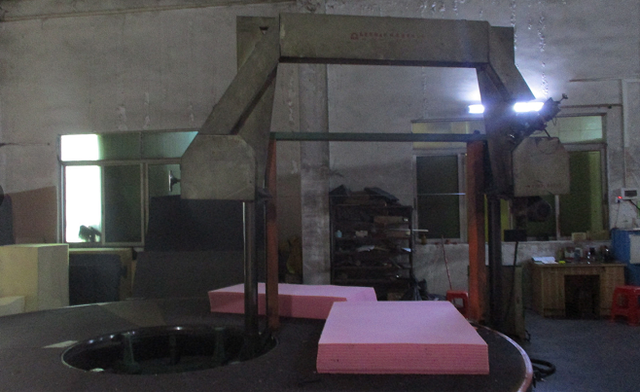
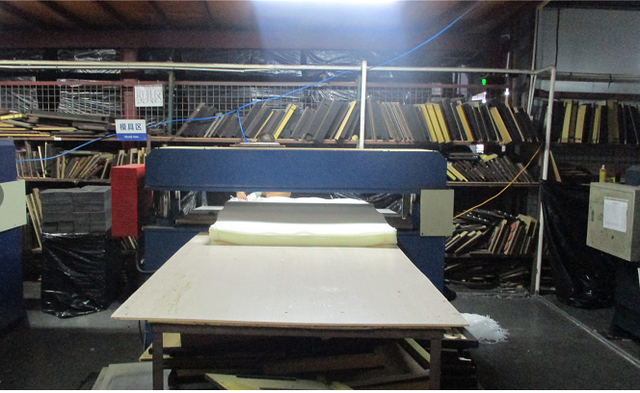
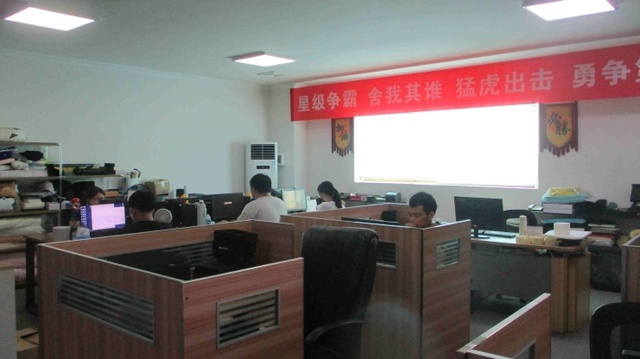
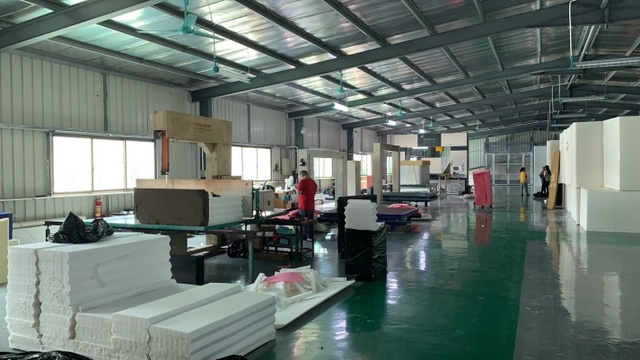
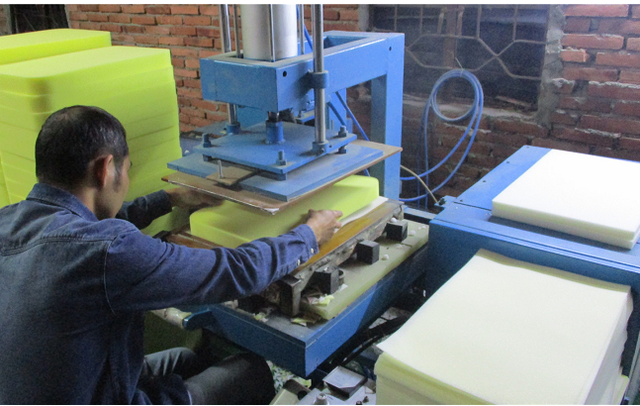
Dongguan Dubuild Panel Co., Ltd. is a professional Acoustic Wall Panel Manufacturer specializing in the design, development, and production of high-performance soundproof panels and noise control solutions for global markets. With its manufacturing base located in the dynamic industrial hub of Dongguan, China, Dubuild Panel integrates advanced production technology, strict quality control, and innovative acoustic engineering to deliver products that meet diverse architectural and environmental needs.
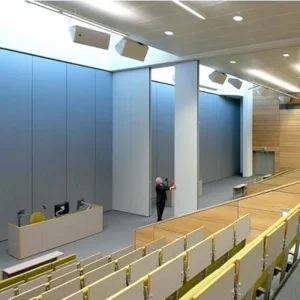
The company’s core product portfolio includes a wide range of acoustic wall panels, sound-absorbing boards, and noise-reduction systems tailored for commercial, residential, hospitality, and institutional applications. These solutions are engineered to improve interior sound quality by minimizing echo, reducing noise transmission, and enhancing acoustic comfort in spaces such as offices, studios, auditoriums, conference rooms, and public venues.
Committed to excellence, Dubuild Panel emphasizes customization and performance, offering clients flexible design options, material selections, and finishes that align with both functional and aesthetic requirements. With a focus on sustainability, the company utilizes environmentally responsible materials and adheres to international standards throughout its manufacturing process. Through its dedication to innovation, quality, and customer satisfaction, Dongguan Dubuild Panel Co., Ltd. has established a reputation as a reliable partner for architects, designers, and acoustic professionals seeking effective noise control and superior acoustic solutions.

A technical guide for specifying acoustic absorption, insulation coefficient, fire resistance, and substrate density across project applications.
| Material Classification | Core Substrate | Typical Thickness | NRC Rating | Fire Retardancy | Primary Commercial Application |
|---|---|---|---|---|---|
| Perforated MDF Acoustic Panels | E0/E1 Grade MDF Core | 12mm / 15mm / 18mm | 0.75 - 0.88 | Class B1 / Class A | Auditoriums, Conference Centers, Theaters |
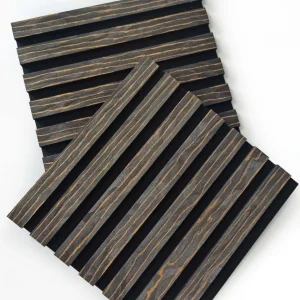
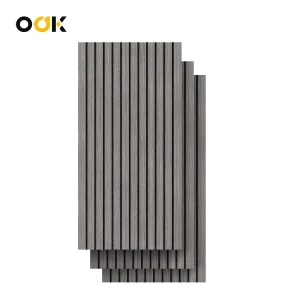
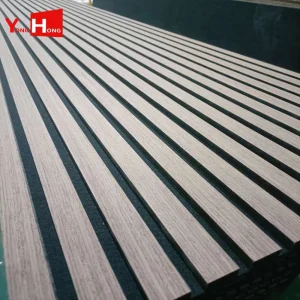
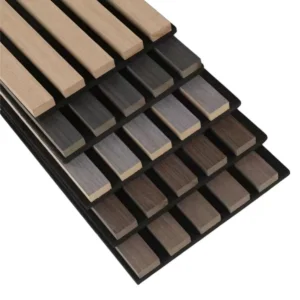
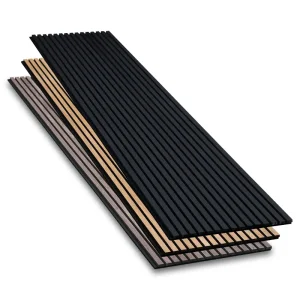
| PET Felt 3D Wood Slat Panels | Recycled Polyester + Wood Veneer | 18mm - 22mm | 0.85 - 0.95 | ASTM E84 Class A | Luxury Commercial Interiors, Hotels, Offices |
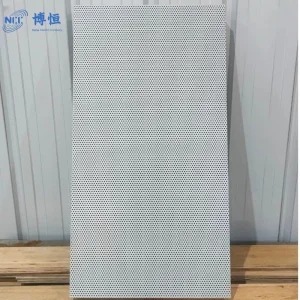
| Microperforated Aluminum Panels | Aluminum Honeycomb Core | 15mm - 25mm | 0.80 - 0.90 | Class A Non-Combustible | Cleanrooms, Airports, Transit Stations, Dining Halls |
| Industrial Metal Sound Enclosures | Galvanized Steel / Rockwool Core | 50mm - 100mm | 0.90 - 1.00 | Class A Industrial | Plant Equipment Rooms, Generator Enclosures, HVAC |
| High-Density Acoustic Foam | Polyurethane / Melamine Foam | 25mm - 50mm | 0.70 - 0.90 | UL94 HF-1 / CAL 117 | Recording Studios, Broadcast Pods, Anechoic Rooms |
Porous sound absorbers convert acoustic wave energy into heat via viscous friction within tortuous airflow channels. Factors like flow resistivity, tortuosity, and open porosity dictate low-to-mid frequency attenuation profiles in PET and mineral wool matrices.
Slotted and perforated timber acoustic boards operate on the principle of Helmholtz resonators. Incident sound frequencies trapped inside the perforated cavity reverberate against an airtight backing layer, dramatically lowering reverberation times in voice-frequency ranges (250Hz - 2000Hz).
While Noise Reduction Coefficient (NRC) quantifies interior sound absorption (reflectivity reduction), Sound Transmission Class (STC) measures airborne sound insulation across wall assemblies. Structural acoustics requires balancing high-STC barrier cores with high-NRC surface treatments.
Ensuring seamless architectural compliance across North American, European, Middle Eastern, and Asia-Pacific regulatory regimes.
Full compliance with ASTM E84 (Class A) surface burning testing (flame spread index < 25, smoke developed index < 450) and European EN 13501-1 (B-s1, d0) standard for critical public infrastructure safety.
Zero-VOC and ultra-low formaldehyde emission profiles conforming to LEED v4 EQ Credit, OEKO-TEX Standard 100, and EN 717-1 (E0 Grade) standards to protect long-term occupant health.
Every product series is benchmarked under ISO 354 / ISO 11654 reverberation room test standards, providing project engineers with precise 1/3-octave frequency sound absorption coefficient curve data.
Pioneering next-generation acoustic engineering through advanced material science and automated digital manufacturing.
Sub-wavelength acoustic metamaterials engineered with sub-millimeter unit cells, offering ultra-thin profiles capable of attenuating deep low-frequency sound waves (<100Hz) previously unmanageable by standard absorbers.
Transitioning from petrochemical acoustic foams to bio-derived polylactic acid (PLA) and circular bio-foams, significantly diminishing embedded carbon footprints while retaining superior open-cell acoustic absorption performance.
Smart, modular partition systems combining automated motorized sound barriers with microperforated surfaces that dynamically adapt interior sound propagation based on occupancy density and room usage.
Clear, direct insights for enterprise procurement officers, architectural specifiers, and distribution partners.
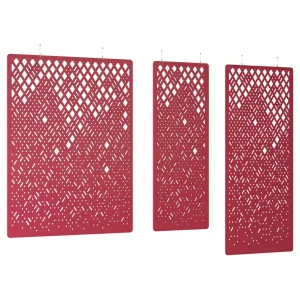
Architectural sound absorption tiles, perforated wood panels, studio foams, and noise control enclosures.

 Dubuild Panel